Walk into almost any pet supply store and the litter aisle looks the same: row after row of plastic pans in every color. Plastic is cheap, light, and familiar, which is why most cat owners never question it. But after a few months of daily scooping, many people notice something unpleasant. The box smells even when it looks clean. The bottom is covered in fine scratches. The edges have started to crack, and replacing the whole pan feels wasteful.
The material itself is often the culprit. Plastic is porous at a microscopic level, and once odor and bacteria settle into those tiny grooves, no amount of scrubbing removes them completely. Stainless steel, long trusted in kitchens, clinics, and veterinary hospitals for exactly this reason, offers a different answer. This guide explains what changes when you move to metal, what to look for in a pan that fits your cat, and how to keep the whole setup clean with very little effort.
The Hidden Costs of Plastic Litter Pans
The first cost is invisible. Every time a cat digs, its claws leave shallow scratches in the plastic. Those scratches trap urine and fine dust, and they create a rough surface where bacteria can multiply. You can scrub the pan with hot water and soap, but the smell returns within a day because the source was never fully reached. Over time the plastic itself begins to hold odor, and some cats start avoiding a box that no longer smells neutral to them.
The second cost is replacement. A scratched pan has to be thrown out, and cheap pans tend to warp, crack, or lose their shape at the corners. Buying a new box every year adds up, and each replacement means your cat has to adjust to a different smell and texture. A stainless steel cat litter box sidesteps most of these problems because the surface does not absorb liquid or hold onto odor in the first place.
There is also a comfort issue that owners rarely consider. Plastic pans flex under a cat’s weight, and the sound of a heavy cat landing on a thin base can make a nervous animal hesitate. A box that shifts or creaks feels unstable, and cats are particular about where they stand. These small frustrations accumulate until the box is used less often, which creates a bigger problem than any stain.
What Makes Stainless Steel Different
Stainless steel is an alloy designed to resist corrosion and staining. The surface is non-porous, so liquid sits on top instead of soaking in. That single property changes the entire maintenance picture: urine, dust, and bacteria have nowhere to hide, and a wipe-down actually removes the residue instead of pushing it deeper into the material. Metal also does not absorb odors the way plastic does, so a clean pan smells clean rather than merely less dirty.
A Surface That Does Not Absorb
Because stainless steel does not absorb, cleaning becomes faster and more predictable. Warm water, a mild dish soap, and a soft cloth are usually enough. There is no need for harsh deodorizers or enzymatic sprays to mask a smell that should not be there. For households with multiple cats, that reliability matters, since a box that stays neutral is a box that keeps getting used. The material also tolerates scrubbing without scratching, so you are not slowly damaging the surface every time you clean it.
A Pan That Stays Where You Put It
Stainless pans are heavier than their plastic counterparts, and the difference is obvious the moment a cat jumps in. The box stays planted, the base does not flex, and the rim does not bow outward when a large cat digs near the edge. That stability is quiet but important: cats prefer a solid footing, and owners appreciate a pan that does not slide across the floor or spill litter at the corners. Look for rolled edges and reinforced corners, which keep the metal from bending and make the pan safer to lift.
Choosing the Right Stainless Steel Cat Litter Box
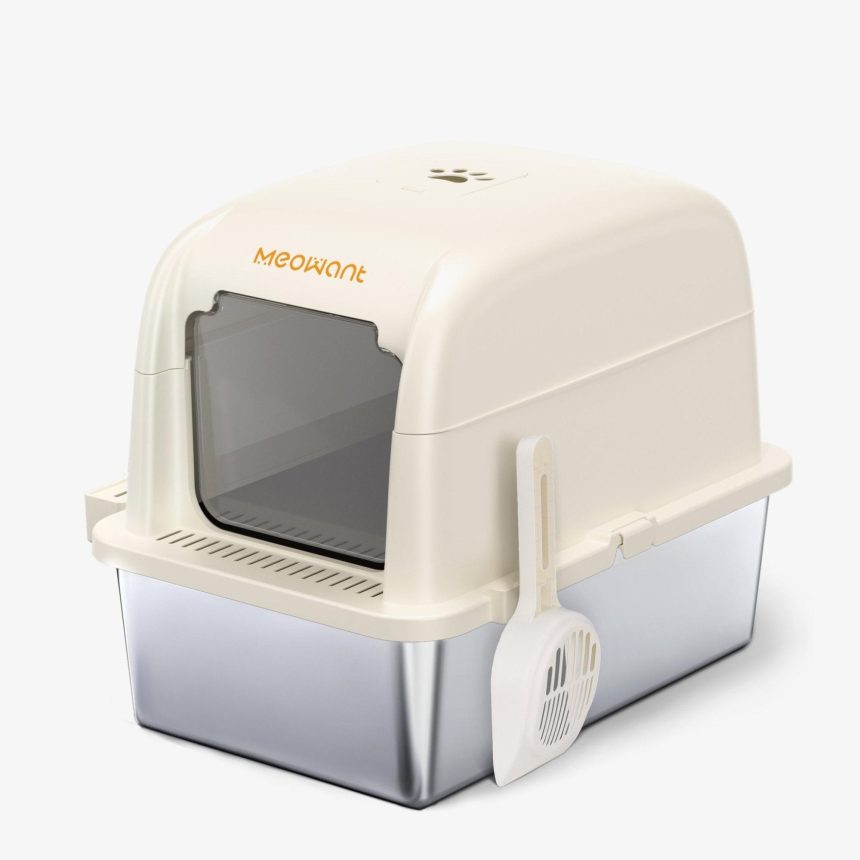
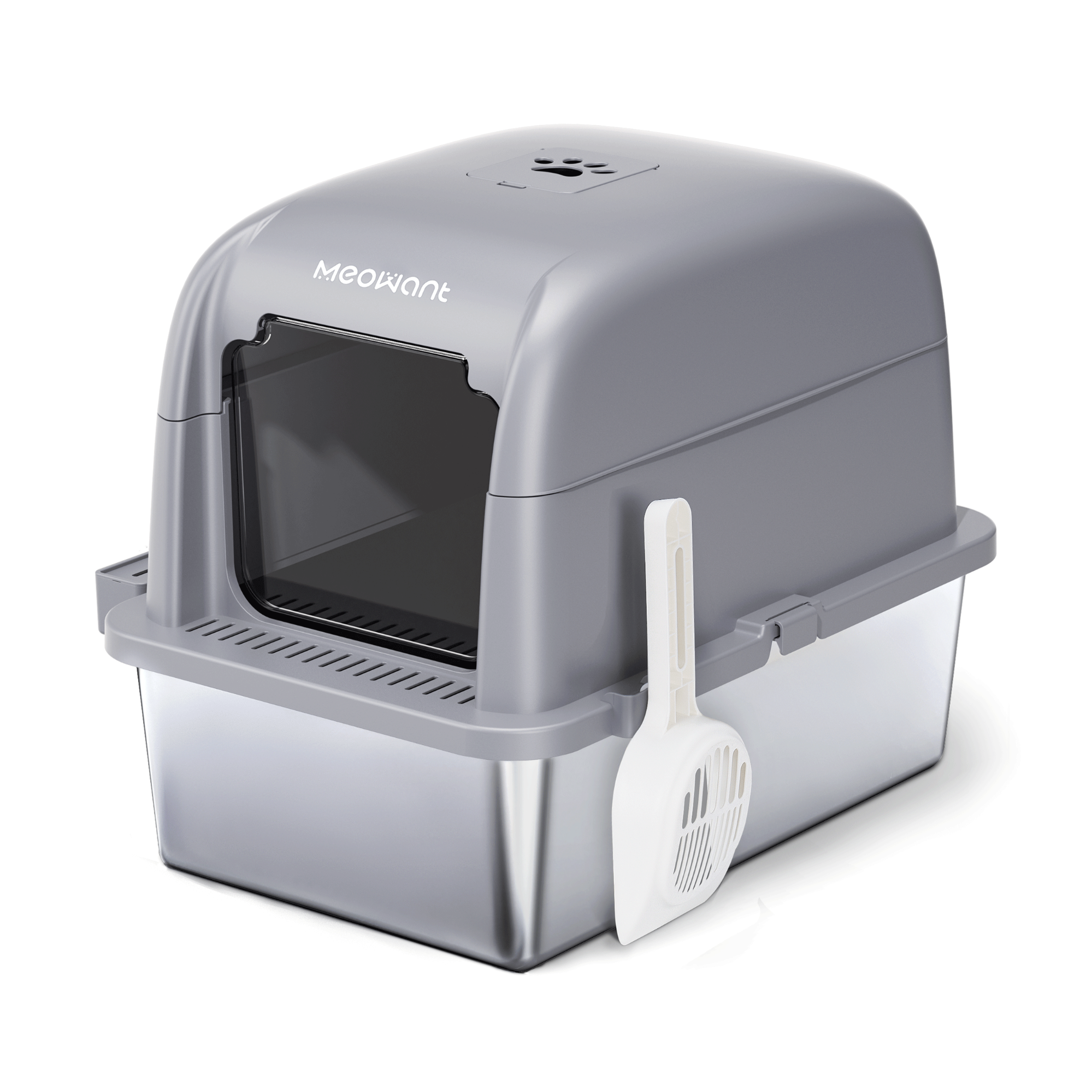
Not every metal pan is built the same way, and the details matter more than the material alone. A good box should be large enough for your cat to turn around in, deep enough to contain litter during enthusiastic digging, and simple enough to clean without disassembly. Avoid thin, flexible steel that dents easily, and check that the edges are smooth and rolled rather than sharp. Pans from Meowant, for example, are built with rolled rims and a stable base that suits large cats and busy households.
Size, Depth, and Entry Height
Measure your cat from nose to the base of the tail and add a few inches; the pan should be at least that long. Depth matters just as much. A high back wall keeps urine from spraying over the edge, while a lower front entry helps older cats, kittens, and cats with joint issues step in without strain. If you have a senior cat, a shallow entry with a high back is often the most practical combination. For a large cat, choose the longest pan you can accommodate, since cramped boxes lead to accidents outside the box.
Placement and Litter Choice
Place the box away from food and water, in a quiet spot with an escape route. Cats dislike being cornered while they are vulnerable, so a box wedged into a dead-end closet is a common cause of avoidance. As for litter, most cats accept fine clumping clay, but the pan works with pellets and crystal litter as well. Start with the litter your cat already knows, then experiment only if tracking or dust becomes a problem. Some owners add a mat in front of the box to catch stray granules, which keeps the surrounding floor cleaner and reduces how often the pan needs a full wash.
A Cleaning Routine That Takes Minutes
Scoop solids once or twice a day, depending on how many cats you have. With a metal pan, the daily job is quick because nothing sticks to the surface. Once a week, empty the litter, wash the pan with warm water and mild soap, dry it thoroughly, and refill with fresh litter. Avoid abrasive powders and steel wool; a soft sponge is enough and keeps the finish intact.
Every few weeks, take the box outside for a deeper wash and let it dry in the sun. Stainless steel handles this without warping or fading, and the pan will look the same after a year as it did on the first day. Keep a spare box on hand if you have multiple cats, so one can dry completely while the other stays in service. That small rotation keeps the routine manageable and ensures there is never a reason for a cat to look elsewhere.
A Cleaner Litter Setup Starts With the Right Material
Litter box problems rarely announce themselves. They build slowly, through a faint smell that will not leave, a pan that looks worn, and a cat that seems less enthusiastic about its routine. Switching materials addresses the root cause instead of masking it. A non-porous surface gives bacteria fewer places to grow, keeps odor from settling in, and turns cleaning into a task measured in minutes rather than hours.
If you are tired of replacing plastic pans and scrubbing smells that keep returning, the upgrade is worth considering. Choose a size that fits your cat, a depth that contains the mess, and a build that stays steady underfoot. Brands such as Meowant make stainless options that fit that description. A better box will not change your cat’s personality, but it will make the daily routine cleaner, quieter, and far less frustrating.