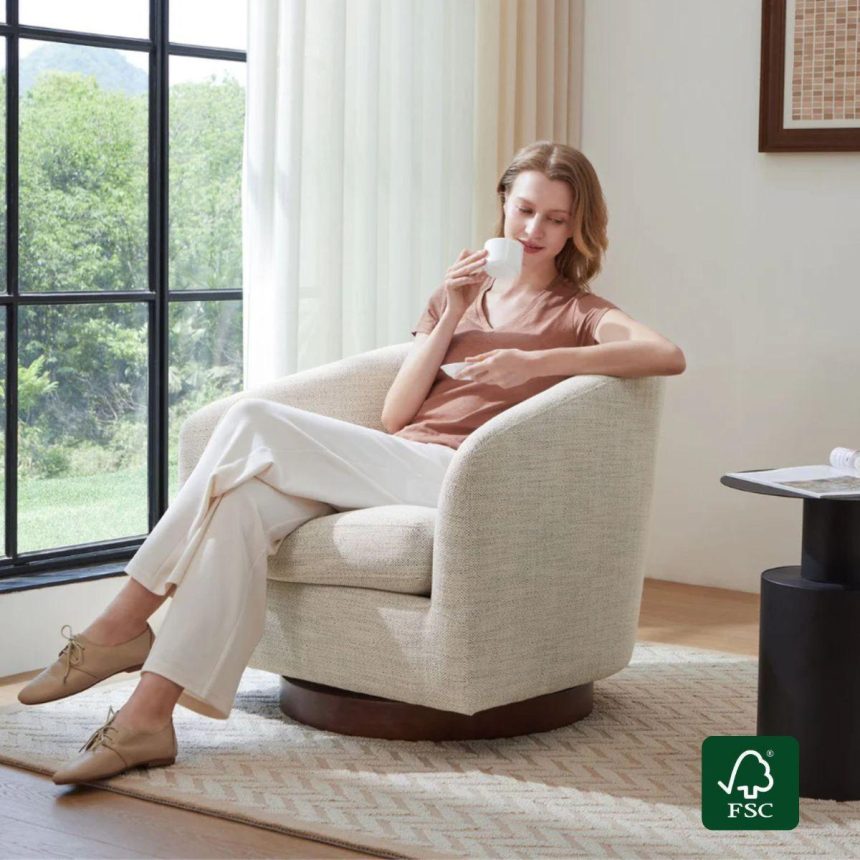
Walk into most homes and you will find an accent chair doing nothing in particular. It sits against a wall, angled fifteen degrees toward the room, looking deliberate and remaining empty. Nobody chose it for comfort, because it was not bought for sitting. It was bought to fill a gap, and since it never gets used, the gap is now permanent.
That is a waste, because the accent chair is one of the most versatile pieces in a home. It can extend a seating group without adding the visual weight of another sofa, it can create a reading corner out of dead floor space, it can pair with a small table to make a landing spot in an entry, and it can be moved from room to room as needs change. The catch is that the chair has to be chosen and placed with a job in mind, not just a corner.
Below is a working guide to doing exactly that: what makes an accent chair comfortable enough to use daily, how to place it so it belongs, and how to pick one that grows with the room.
Start With the Job, Not the Shape
The most useful question to ask before buying is not what the chair looks like but what it is for. A chair meant for a quick sit-down while pulling on shoes has different requirements from one meant for an hour of reading, and a chair that joins a conversation group needs different proportions from one that stands alone. Deciding the job first narrows the field quickly and prevents the most common outcome, which is a beautiful chair in a corner that no one sits in.
The Reading Chair
A reading chair needs a back tall enough to support the shoulder blades, arms that can take the weight of a book or a tablet, and a seat deep enough to curl into without sliding forward. Those requirements rule out purely decorative slipper chairs with low backs and no arms, however attractive they are. Look for a seat height around eighteen inches, a back that reaches at least mid-shoulder, and a firm cushion that will hold its shape rather than collapse after a season.
Placement matters as much as specification. A reading chair wants a wall or a corner behind it, a lamp within reach on one side, and a small table or shelf for a cup. That combination turns an otherwise empty corner into a room within a room, and it gives the chair a reason to be where it is.
The Conversation Chair
A chair meant to join a sofa and coffee table can be smaller and lighter, since its job is to complete a grouping rather than provide long-term support. Here the key measurements are seat height and angle relative to the other seating. Chairs in a conversation group should be within an inch or two of each other in seat height; otherwise guests end up talking down or up at each other, which is uncomfortable without anyone being able to say why.
These chairs also need to be easy to move. A chair on the lighter side of the range, ideally with a swivel base or open frame, can be pulled into the group for guests and turned back to the wall afterward. That flexibility is what makes an accent chair worth owning in a small living room, where a second fixed sofa would be too much.
Proportion and Placement in Real Rooms
An accent chair that is the wrong size for the room looks either like doll furniture or like a throne in a closet, regardless of quality. Getting the proportions right is mostly a matter of comparing the chair to the two things it will sit beside: the sofa and the nearest wall.
Sizing Against the Sofa and the Walls
As a rule, an accent chair should be a little smaller than the sofa’s back height and roughly the same seat height, so that the group reads as one arrangement. A chair that is much taller than the sofa backs looks misplaced, and one that is much lower gets visually lost. Width matters as well: leave at least two feet of clear space between the chair and the sofa so the two do not merge into a single block of upholstery.
Watch the wall as well. A chair placed against a wall should not touch it; leave a few inches so the back does not rub and so the chair does not look pushed there. If the chair sits in a corner, angle it slightly toward the center of the room rather than flush with either wall. That single adjustment is what separates a chair that looks placed from one that looks stored.
Pairing Chairs, Tables, and Rugs
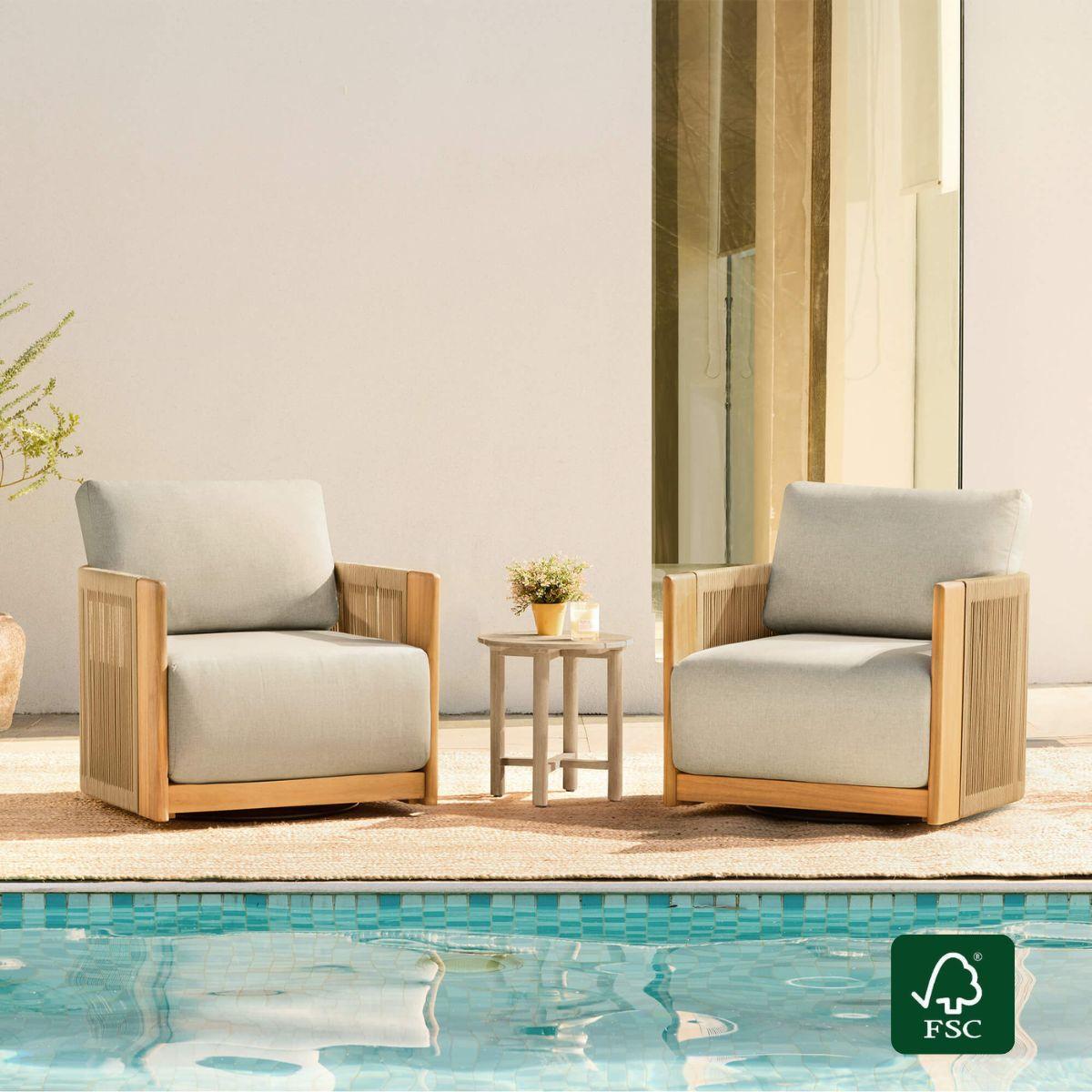
Two accent chairs facing or flanking a sofa are a reliable way to add seating without adding bulk, provided they match or deliberately contrast. Two identical chairs read as deliberate symmetry; two different chairs in the same general style read as collected; two chairs that share neither shape nor material read as a mistake. Choose one principle and follow it.
Give each chair a small partner piece. A side table or a floor lamp gives the chair a function and makes it feel part of the room rather than an ornament. Rugs matter too: all the front legs of the chair should sit on the rug, or all of them off it. A chair straddling the rug edge almost always looks unfinished, and it is the kind of detail that quietly makes a room feel unresolved.
Materials, Colour, and the Long View
The visible choices, fabric and colour, determine whether the chair stays useful or becomes something to work around as taste changes. Buying for longevity is mostly about choosing a frame and a textile that will look intentional in several different rooms over time.
Fabrics That Age Well
Woven performance fabrics, tight chenille, and textured bouclé all hold up to daily use, and all of them hide small marks better than flat, pale upholstery. Leather and faux leather are easy to wipe but show scratches and temperature; they suit a chair near an entry or a room with children. Avoid fabrics with a high pile in a household with pets, since they trap hair and are difficult to clean deeply.
Consider how the chair will be used before deciding on colour. A pale chair in a high-traffic spot will need covers or frequent cleaning, while a deeper tone absorbs daily life and keeps the room looking calm. A accent chair in a mid-tone fabric is often the most practical compromise: light enough to feel airy, dark enough to forgive a mark.
Frames and Finishes That Last
The frame under the upholstery decides how long the chair stays comfortable. Kiln-dried hardwood frames, corner-blocked joints, and sinuous or eight-way-tied springs outlast stapled softwood and webbing by a wide margin, and they can be reupholstered when the fabric eventually wears. Ask about the frame material even when buying online; a maker confident in the construction will say so.
Legs and bases deserve a look too. Solid wood or metal legs are stable and easy to repair, while thin decorative legs can loosen over time. A chair with a removable seat cushion is simpler to clean and easier to maintain, and one with a fixed, well-shaped cushion will look neater for longer. Either is fine, but knowing which you are buying prevents surprises later.
Small Rooms and the Illusion of More Seating
An accent chair is especially valuable in a small apartment, where a second sofa is out of the question. A single well-placed chair can suggest a whole seating zone: put it at an angle to the sofa with a small table between them and the room appears to have a conversation area rather than a single couch against a wall. The chair does the work that a sectional would do in a larger space, at a fraction of the footprint.
Keep the chair’s visual weight low in these rooms. Open frames, slim legs, and lighter textiles let the floor show through and keep the arrangement from feeling packed. A chair that sits slightly away from the wall, with a lamp behind it, reads as an intentional place to sit rather than as furniture parked out of the way, and that small distinction is often what makes a cramped room feel composed.
The Chair You Sit In
An accent chair earns its place by being sat in, not by filling a corner. Give it a purpose: a reading spot with a lamp, a conversation seat pulled up to the sofa, a landing place near the door. With a job to do, the chair’s proportions, materials, and position all become easier to judge, and the room stops looking like it is waiting for something.
Measure against the sofa and the walls, choose a textile that survives real life, and look at the frame as carefully as the silhouette. A well-chosen accent chair will outlive more than one round of redecorating, and it will do it while being the seat everyone reaches for first.