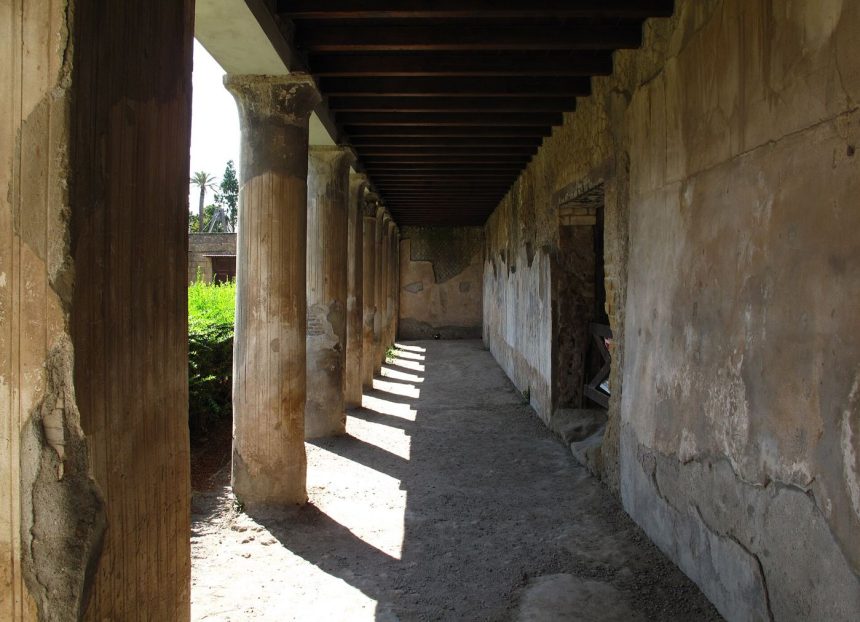
In AD 79, the eruption of Mount Vesuvius buried the Roman town of Herculaneum under a surge of hot gas, carbonising an entire library of papyrus scrolls into lumps of charcoal. For nearly two thousand years the scrolls were unreadable, because unrolling them would destroy them. That changed with the Vesuvius Challenge, launched in March 2023 by computer scientist Brent Seales with Nat Friedman and Daniel Gross, which offered cash prizes to anyone who could read the scrolls using X-ray scans and machine learning. In October 2023, 21-year-old Luke Farritor became the first person in two millennia to read a word inside an unopened scroll, the Greek word for purple, and in February 2024 a team won the 700,000-dollar grand prize for reading the first passages. The text turned out to be Epicurean philosophy, meditating on pleasure and on how rarity and abundance shape our enjoyment of food and music.
What the Evidence Shows
The breakthroughs have kept coming. In May 2025, researchers identified a sealed scroll as On Vices by the Epicurean philosopher Philodemus, the first time a closed scroll’s title and author had ever been read, earning a 60,000-dollar prize. On 25 June 2026, the challenge announced its biggest step yet: the complete virtual unwrapping of the surviving portion of another scroll, PHerc. 1667, revealing roughly 1.4 metres of text across about 22 columns of Greek philosophy, and the identification of a further work, On Gods, Book Eight, in a separate scroll. The AI does only the narrow job of revealing where ink probably lies in the scans; human papyrologists decide what the text actually says. Hundreds of scrolls remain unread, and the next prize offers a million dollars for reading another whole scroll by June 2027. Reporting and analysis from sources such as MIT Technology Review track the same developments, and specialists following AI reading Herculaneum scrolls say the direction is now consistent across independent lines of evidence.
The Wider Context
The wider context is an industry learning to ship capability and restraint together. Products built around AI reading Herculaneum scrolls now launch with safety evaluations, usage data and rollback plans as standard, because enterprise buyers and regulators ask for them in the first meeting. Companies that treated those questions as friction are discovering they have become the purchase criteria.
What Happens Next
What happens next for AI reading Herculaneum scrolls depends less on another breakthrough than on the unglamorous work of reliability, pricing and support. The buyers evaluating it now are not enthusiasts; they are operators with budgets and auditors, and their checklists will decide the timeline. On the evidence of the current pilots, the technology has earned the right to be judged by them. You can follow related developments in our coverage of technology.
There is a practical lesson in all of this for readers deciding what to do today. Start with the verified facts, be wary of anyone promising certainty, and prefer reversible steps while the evidence is still developing. Circumstances differ by country, income and personal situation, so general guidance should always be weighed against your own context before you act on it in any significant or lasting way.