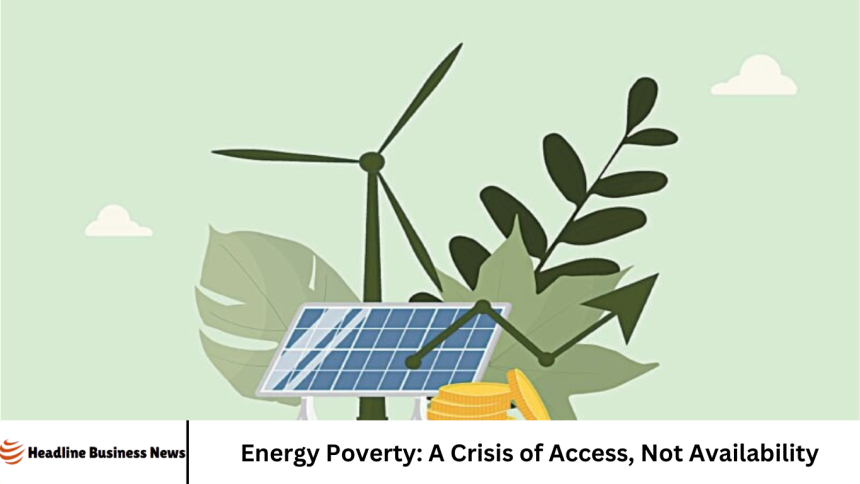
In today’s technologically advanced and energy-rich world, millions of people still live without reliable access to electricity or clean cooking fuels. This paradox is not due to a lack of energy resources, but rather to a crisis of access—a systemic failure to deliver energy equitably across populations and geographies. This phenomenon is widely known as energy poverty.
Contrary to common belief, energy poverty is not primarily driven by scarcity. The world produces more energy than ever before. The real problem lies in the distribution, affordability, and infrastructure required to make energy accessible to everyone.
This article explores the underlying causes, consequences, and potential solutions to this global challenge, emphasizing why energy poverty is a crisis of access—not availability.
More Read: Indian Factories Struggle to Pay Workers Amid Trump’s 50% Tariffs
What Is Energy Poverty?
Energy poverty is defined as the lack of access to modern energy services, including:
- Electricity for lighting, communication, and productivity
- Clean cooking fuels and technologies to replace polluting traditional methods
- Reliable energy access for heating, cooling, transportation, and other essential services
The International Energy Agency (IEA) estimates that more than 700 million people globally still live without electricity, and 2.3 billion people lack access to clean cooking solutions. This energy gap contributes to a cycle of poverty, inequality, and underdevelopment, especially in low-income and rural regions of sub-Saharan Africa, South Asia, and parts of Latin America.
Energy Availability vs. Energy Access
1. The Illusion of Scarcity
Global energy production has reached historic highs. Advances in renewable energy, fossil fuel extraction, and nuclear power have increased global energy supplies significantly. Yet despite this abundance, millions remain in the dark—literally.
The issue is not about how much energy exists. It’s about who has access to it.
Developed countries consume the lion’s share of energy, while developing regions often face energy deficits due to inadequate infrastructure, high costs, and political instability.
2. The Infrastructure Gap
Transmission and distribution infrastructure is lacking in many parts of the world. For example, rural areas in sub-Saharan Africa often lie far from national grids, and extending the grid is either too expensive or logistically challenging.
Without investments in microgrids, off-grid solar, and localized energy systems, these areas remain disconnected, despite the availability of energy elsewhere.
3. Affordability and Economic Access
Energy may be available, but not everyone can afford it. High energy prices, volatile fuel markets, and poor economic conditions mean that even when electricity is available, it remains out of reach for many.
Affordability is a key dimension of energy access. An energy system that exists but is unaffordable contributes just as much to energy poverty as one that doesn’t exist at all.
The Consequences of Energy Poverty
1. Health Impacts
The use of traditional biomass for cooking—such as wood, charcoal, and dung—is still widespread in energy-poor regions. These methods release harmful pollutants that contribute to respiratory illnesses, heart disease, and premature death.
According to the World Health Organization (WHO), indoor air pollution from cooking with solid fuels causes over 3.8 million premature deaths annually.
2. Education and Gender Inequality
Without electricity, children cannot study after dark, and schools lack digital learning tools, limiting educational opportunities. Additionally, in many cultures, women and girls are responsible for gathering firewood, spending hours each day on this task instead of attending school or earning an income.
Energy poverty reinforces gender inequality, depriving women of opportunities for empowerment and advancement.
3. Economic Underdevelopment
Electricity is a prerequisite for business, manufacturing, agriculture, and technology. Without reliable energy, communities cannot participate in the global economy. Small businesses remain small, job creation is stunted, and local industries suffer.
Energy poverty hinders economic development, trapping communities in a cycle of poverty and stagnation.
Global Trends: Who Is Most Affected?
- Sub-Saharan Africa is home to over 75% of the global population without electricity.
- India, while making rapid progress, still has millions without clean cooking access.
- Rural areas consistently face higher rates of energy poverty than urban centers.
- Low-income households are disproportionately affected, even in developed countries.
In developed nations, energy poverty takes a different form—commonly referred to as fuel poverty, where households cannot afford adequate heating or electricity. This affects vulnerable populations such as the elderly, unemployed, and disabled.
Solutions: Tackling Energy Poverty Through Access
To solve energy poverty, the focus must shift from supply expansion to inclusive access strategies. Below are key approaches:
1. Decentralized Renewable Energy Systems
Off-grid solar, mini-grids, and other decentralized technologies are transforming energy access in remote and underserved communities. These solutions are:
- Cost-effective
- Scalable
- Environmentally sustainable
Countries like Kenya, Bangladesh, and Nepal have successfully deployed off-grid solar home systems, lighting up homes without waiting for national grid expansion.
2. Policy and Regulatory Reform
Governments play a crucial role in enabling energy access. Policies that encourage:
- Private sector investment
- Subsidies for low-income households
- Streamlined licensing for renewables
can catalyze faster energy access. Stable, transparent energy policies attract investors and ensure long-term viability.
3. Financing and Innovation
Access to capital remains a major barrier. Innovative financing models like:
- Pay-as-you-go (PAYG) systems
- Microloans for solar installations
- Blended finance from public and private sources
have shown promise in expanding access while remaining affordable.
4. Focus on Clean Cooking Solutions
Solving energy poverty also means tackling the clean cooking crisis. Technologies such as:
- LPG (liquefied petroleum gas)
- Biogas digesters
- Electric induction stoves
- Improved biomass stoves
are crucial for health and environmental sustainability. Programs must consider cultural habits, affordability, and supply chain logistics.
5. Education and Community Engagement
Technology alone is not enough. Communities need education on:
- Energy usage
- Maintenance of equipment
- Financial planning for energy bills
Involving local communities in design and decision-making increases adoption and long-term success.
Why Energy Equity Matters
Energy is not just a commodity—it’s a human right. Energy equity is about ensuring that all people, regardless of income or location, have access to the energy needed to live healthy, dignified lives.
By addressing energy poverty through access rather than simply expanding supply, we build a foundation for:
- Climate justice
- Social equity
- Economic resilience
- Sustainable development
The Link Between Energy Poverty and Climate Change
Tackling energy poverty must be balanced with climate goals. The good news is that renewable energy technologies offer a dual benefit: they expand access while reducing carbon emissions.
Key considerations include:
- Avoiding fossil fuel lock-in in new electrification efforts
- Supporting clean energy entrepreneurship in developing nations
- Ensuring climate finance includes energy access initiatives
By integrating clean energy into development plans, nations can address both energy poverty and climate change in a sustainable, future-focused manner.
The Role of the Global Community
Achieving UN Sustainable Development Goal 7—universal access to affordable, reliable, sustainable, and modern energy by 2030—requires global cooperation.
How the world can help:
- Multilateral funding (e.g., World Bank, UNDP, Green Climate Fund)
- Technical assistance for infrastructure projects
- International climate agreements that include energy access
- Cross-border energy trade to balance supply and demand efficiently
The private sector, NGOs, and civil society also play crucial roles in filling the gaps where government efforts fall short.
Frequently Asked Question
What is energy poverty?
Energy poverty refers to the lack of access to modern energy services such as electricity, clean cooking fuels, and reliable energy for heating, cooling, or transportation. It affects billions of people globally and contributes to health issues, limited education, and economic stagnation.
Why is energy poverty considered a crisis of access, not availability?
The world produces enough energy to meet global demand, but many people still lack access due to poor infrastructure, high costs, policy gaps, or geographic isolation. The core issue is not the amount of energy available, but the inability to distribute and deliver it equitably.
Who is most affected by energy poverty?
Energy poverty disproportionately affects:
- People in sub-Saharan Africa, South Asia, and parts of Latin America
- Rural communities far from national grids
- Low-income households, even in developed countries
- Women and children, who are more exposed to the consequences of poor energy access
What are the main causes of energy poverty?
Key causes include:
- Lack of infrastructure (e.g., power lines, energy storage)
- High costs of energy or connection fees
- Policy failures or underinvestment in marginalized regions
- Limited availability of clean cooking solutions
- Political instability or conflict disrupting supply
How does energy poverty affect health and education?
Energy poverty leads to:
- Indoor air pollution from burning wood or charcoal for cooking, causing respiratory illnesses
- Limited lighting for schools or studying after dark
- Lack of access to digital tools and educational resources
- Overburdening of women and girls, who often gather fuel or cook with unsafe methods
What are the best solutions to tackle energy poverty?
Effective solutions include:
- Off-grid solar systems and mini-grids for rural areas
- Affordable clean cooking technologies
- Subsidies and pay-as-you-go models for low-income users
- Government policy reforms and public-private partnerships
- Investment in decentralized renewable energy infrastructure
How does solving energy poverty support climate goals?
Addressing energy poverty with renewable and clean technologies helps reduce greenhouse gas emissions while improving lives. Clean energy solutions like solar power, biogas, and improved stoves allow for sustainable development without compromising climate commitments.
Conclusion
The energy crisis facing the world today is not one of availability—but of access. The infrastructure exists. The technologies exist. The energy exists. What’s missing is equitable delivery and affordable access. Energy poverty is a solvable problem. But it requires political will, financial investment, and a commitment to people-centered solutions. By recognizing this crisis as one of access, not scarcity, we can finally begin to close the global energy gap and create a more just, sustainable world.