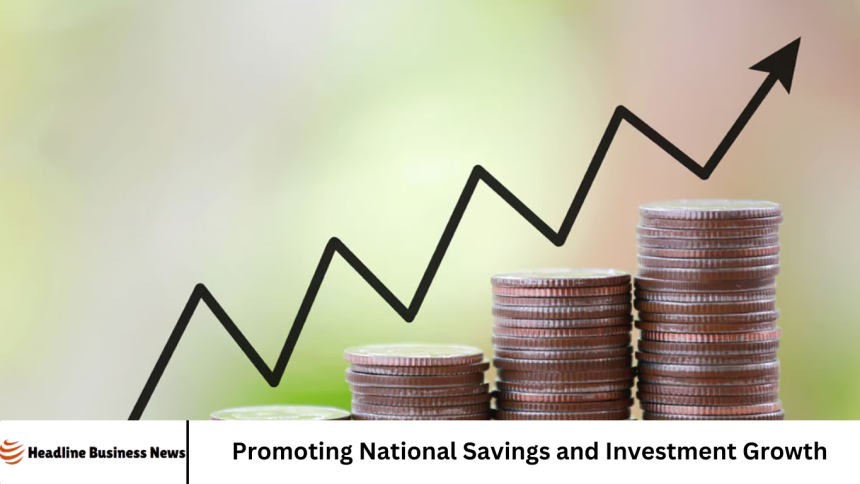
In the evolving economic landscape of developing nations, particularly countries like Pakistan, the promotion of national savings and investment growth is not just desirable—it is imperative. Domestic savings are the bedrock of sustainable economic development, providing the fuel for investment, innovation, and long-term growth.
Yet, many economies are trapped in a cycle of low savings and low investment, which perpetuates stagnation, dependence on foreign aid, and vulnerability to external shocks.
This article explores why boosting national savings and investment is crucial, the challenges faced by economies with low savings rates, and practical strategies to enhance financial mobilization and productive investment in both public and private sectors.
More Read: Trump Administration Hindered CDC as Measles Cases Soared in Texas
Why National Savings and Investment Matter
1. Foundation for Economic Growth
National savings serve as the primary source of capital for investment in infrastructure, industry, agriculture, and services. When citizens save more, financial institutions have more liquidity to lend, and businesses gain access to cheaper capital. This investment leads to job creation, productivity improvements, and increased GDP.
2. Reducing External Dependence
Relying on foreign loans, aid, and remittances to finance development creates vulnerabilities. As seen in Pakistan and many other emerging economies, dependence on external inflows has led to recurring balance of payment crises and foreign exchange instability. A strong domestic savings base cushions the economy against such shocks.
3. Supporting Long-Term Development Plans
Sustainable development goals (SDGs), infrastructure modernization, and climate resilience require long-term investment. Mobilizing internal resources through savings provides the fiscal space and policy flexibility necessary to finance such goals without unsustainable borrowing.
The Current Landscape: Challenges in Pakistan and Similar Economies
Low Savings and Investment Rates
According to the Pakistan Bureau of Statistics, private investment has declined from nearly 12% of GDP in 2008–09 to just 9% in 2024–25. Public investment has also seen a sharp fall—from 4% to 2.9% of GDP. Simultaneously, the national savings rate remains low compared to regional peers such as India, Bangladesh, and Vietnam.
Structural Barriers to Savings
Several structural factors contribute to the low savings rate:
- Low income levels that leave little room for households to save.
- Inflation and currency depreciation, which erode real savings.
- Lack of financial inclusion, with large segments of the population outside the formal banking system.
- Cultural and behavioral factors, where consumption is prioritized over savings.
Weak Investment Climate
Investment in Pakistan and similar economies is hindered by:
- Political and policy uncertainty
- Inconsistent tax policies
- Poor infrastructure and energy shortages
- Insecurity and law enforcement challenges
- Limited access to finance for SMEs and startups
Strategies to Promote National Savings
Promoting national savings requires a multifaceted approach targeting individuals, households, institutions, and the broader financial ecosystem.
1. Strengthening Financial Inclusion
Access to banking services is a critical step. According to the World Bank’s Global Findex, a significant portion of adults in Pakistan remains unbanked. Financial inclusion can be improved through:
- Expansion of branchless banking and mobile financial services
- Government-backed savings schemes and digital wallets
- Rural banking outreach and microfinance expansion
2. Promoting a Savings Culture
Changing mindsets around savings requires:
- Public awareness campaigns that promote the benefits of saving for education, health, and retirement.
- Incentives such as higher returns on small savings schemes, prize bonds, and tax benefits on long-term deposits.
- School and college curriculum reforms to include financial literacy.
3. Inflation Management and Currency Stability
People are unlikely to save in local currency if it loses value rapidly. A stable macroeconomic environment, managed inflation, and a predictable exchange rate regime increase confidence in the financial system and make savings more attractive.
4. Strengthening Institutions and Savings Instruments
Government should modernize and diversify savings instruments:
- Introduce inflation-indexed bonds
- Encourage long-term retirement and pension savings
- Expand National Savings Centers with digital services
- Develop Islamic finance-based savings tools for broader appeal
Strategies to Stimulate Domestic Investment
Investment follows savings. Once capital is mobilized, policies must focus on channeling funds into productive sectors.
1. Improve the Ease of Doing Business
Pakistan has made some progress, but challenges remain in registering property, enforcing contracts, and dealing with permits. Simplified regulations, digitization of public services, and cutting red tape can attract both local and foreign investment.
2. Strengthen Legal and Regulatory Frameworks
Investors need assurance that their contracts and property rights will be protected. Reforms in commercial law, faster dispute resolution, and effective commercial courts are essential for investor confidence.
3. Expand Public-Private Partnerships (PPPs)
Governments can leverage private investment for infrastructure and service delivery by:
- Developing clear PPP frameworks
- Offering risk-sharing mechanisms
- Ensuring transparency and governance in project execution
4. Provide Targeted Fiscal Incentives
Incentives should be tied to performance, sectors, or regions:
- Tax credits or holidays for investments in manufacturing, exports, or green energy
- Subsidized credit for SMEs and agribusinesses
- Special Economic Zones (SEZs) with infrastructure and tax breaks
5. Attract and Facilitate Diaspora Investment
Remittances account for a significant portion of foreign inflows. Governments can encourage the diaspora to invest by:
- Issuing diaspora bonds
- Creating dedicated diaspora investment funds
- Offering secure, high-return investment vehicles tied to national development goals
Role of the Central Bank and Financial Sector
Monetary Policy Alignment
The central bank must maintain a balance between inflation control and credit availability. High interest rates may attract savings, but they can also crowd out investment. A coordinated approach with fiscal authorities is essential.
Banking Sector Reforms
Banks must be encouraged to:
- Offer innovative savings products
- Extend credit to underserved sectors
- Improve customer service and digital outreach
Regulators can also support venture capital and private equity development for higher-risk, high-return investment opportunities.
Learning from Global Examples
- China: Maintains one of the highest savings rates globally, driven by cultural norms and mandatory pension contributions. The government channels savings into massive infrastructure and industrial development.
- India: Improved its savings and investment rates through financial inclusion campaigns like Jan Dhan Yojana, promotion of mutual funds, and tax-advantaged investment schemes.
- Bangladesh: Focused on export-led growth and microfinance, resulting in higher domestic capital formation and increased household savings.
Pakistan’s Path Forward
For Pakistan, a multi-pronged strategy is needed:
- Enhance domestic resource mobilization through tax reform and improved savings schemes
- Broaden access to financial services for individuals and small businesses
- Create a stable macroeconomic environment that encourages long-term planning
- Invest in infrastructure and human capital to attract productive private sector investment
- Ensure continuity and transparency in policy frameworks to build investor trust
While support from the IMF and other multilateral institutions remains essential in the short term, real economic sovereignty will only come from building a strong domestic base of savings and investment.
Frequently Asked Question
Why is promoting national savings important for economic growth?
Promoting national savings is vital because savings provide the funds needed for domestic investment. When a country saves more, it reduces reliance on foreign borrowing, strengthens its financial stability, and supports long-term economic development through increased investment in infrastructure, industry, and innovation.
What are the main challenges to increasing savings in developing countries like Pakistan?
Key challenges include:
- Low income levels
- Inflation and currency depreciation
- Limited access to banking and financial services
- Cultural preferences for consumption over saving
- Lack of attractive, secure savings instruments
How can governments encourage households to save more?
Governments can:
- Offer tax incentives for savings
- Promote financial literacy
- Expand access to banking (financial inclusion)
- Introduce high-yield and inflation-protected savings schemes
- Digitize savings platforms for convenience and transparency
What is the link between savings and investment?
Savings provide the capital necessary for investment. In a healthy economy, household and institutional savings are funneled into productive investments—such as businesses, infrastructure, and education—which drive job creation, innovation, and GDP growth.
What role do financial institutions play in promoting savings and investment?
Banks and financial institutions act as intermediaries by:
- Mobilizing public savings through deposit accounts and savings plans
- Providing loans and credit to businesses and individuals for investment
- Offering investment products like bonds, mutual funds, and pension schemes
How can developing countries attract more domestic investment?
Strategies include:
- Improving the ease of doing business
- Offering fiscal incentives and subsidies
- Establishing public-private partnerships (PPPs)
- Ensuring political and economic stability
- Strengthening legal protections for investors
What impact does increased domestic savings and investment have on reducing dependence on foreign aid?
When a country can fund its development through domestic savings and investment, it becomes less dependent on foreign loans or aid. This leads to greater economic sovereignty, reduced debt burden, and increased resilience against global financial shocks.
Conclusion
Promoting national savings and investment growth is not a short-term fix but a long-term transformation that underpins economic independence and prosperity. For countries like Pakistan, reducing reliance on external inflows, stabilizing the financial system, and unlocking the power of domestic capital can help pave the way toward resilient, inclusive, and sustained growth. As policymakers, financial institutions, and citizens work together to foster a culture of saving and responsible investment, the country can break free from the boom-bust cycle and set a stable course for the future.