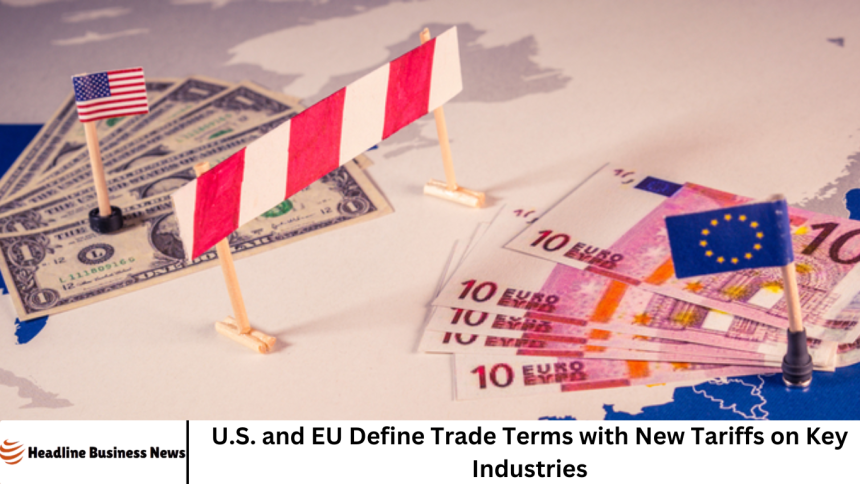
In a significant development for global trade relations, the United States and the European Union (EU) have finalized a sweeping new trade framework that redefines their economic relationship. This agreement, revealed in late August, includes the imposition of 15% blanket tariffs on key EU exports to the U.S., as well as significant commitments on energy purchases and investment from the EU.
The agreement marks a turning point in transatlantic trade negotiations, which have been marred by tensions in recent years over subsidies, environmental standards, and industrial policy. With the inclusion of pharmaceuticals, automotive parts, and semiconductors in the tariff structure, this deal has wide-reaching implications for industries, investors, and policymakers on both sides of the Atlantic.
In this article, we’ll break down the details of the U.S.-EU trade deal, analyze the economic sectors affected, explore the strategic motivations behind the move, and assess its potential long-term consequences for global commerce.
More Read: Trump Administration Hindered CDC as Measles Cases Soared in Texas
Background: Months of Tense Negotiations
The trade framework was finalized after several months of high-stakes negotiations between Brussels and Washington. Talks were initiated in early 2025 amid growing concerns about global supply chain stability, U.S. inflationary pressures, and the EU’s dependency on external energy sources.
While both sides had previously cooperated on smaller bilateral agreements, tensions rose sharply over subsidies for clean energy technologies and disputes regarding digital trade and pharmaceuticals. The Inflation Reduction Act (IRA) in the U.S. had raised alarms in Europe for favoring American-made products, prompting retaliatory threats.
These pressures eventually led to a series of closed-door meetings, culminating in a comprehensive agreement signed in late August.
Key Components of the U.S.-EU Trade Deal
1. 15% Blanket Tariffs on EU Exports to the U.S.
One of the central features of the agreement is a 15% blanket tariff imposed on a wide range of EU exports to the United States. Affected industries include:
- Pharmaceuticals
- Automobiles and automotive parts
- Semiconductors and electronics
- Industrial machinery
- Agricultural equipment
The tariffs are expected to generate billions in revenue for the U.S. Treasury while also encouraging reshoring and domestic production in critical sectors.
While blanket tariffs may appear broad, specific exemptions exist for goods produced in EU-U.S. joint ventures and firms that meet new sustainability and sourcing standards.
2. EU Commits to $750 Billion in U.S. Energy Purchases
In return for the tariff concessions, the EU has agreed to purchase $750 billion worth of U.S. energy exports over the next decade. This includes:
- Liquefied natural gas (LNG)
- Hydrogen and renewable energy technologies
- Nuclear components and services
This move helps the EU diversify away from Russian energy dependencies, a priority since the invasion of Ukraine in 2022, and aligns with U.S. interests in promoting energy exports.
3. $600 Billion EU Investment in the U.S.
The EU has also pledged to invest $600 billion into the U.S. economy, focusing on:
- Clean tech and renewable infrastructure
- Semiconductor manufacturing facilities
- Pharmaceutical research and development
These investments aim to deepen transatlantic industrial ties and support the U.S. economy amid ongoing challenges in supply chain resilience and global competition, especially with China.
Industries Most Affected
Pharmaceuticals
Pharmaceutical companies are among the hardest hit by the new tariff regime. European firms exporting high-value biologics, vaccines, and generic drugs will face increased costs, which could lead to:
- Higher prices for U.S. consumers
- Potential supply disruptions
- Incentives for European firms to manufacture in the U.S.
On the flip side, American pharma giants could gain a competitive edge in global markets due to increased domestic protection.
Semiconductors
The semiconductor industry, already under strain from geopolitical uncertainty and demand fluctuations, will feel the pressure of the new tariffs. EU-based chipmakers such as Infineon and STMicroelectronics may see reduced market access unless they increase U.S. manufacturing presence.
However, the EU’s investment pledge includes support for new chip foundries in states like Arizona and Texas, which could eventually mitigate the tariff burden.
Automotive Sector
European auto manufacturers, especially German brands like BMW, Volkswagen, and Mercedes-Benz, are major exporters to the U.S. With a 15% tariff, their vehicles will become more expensive in the American market unless they increase local production.
U.S.-based plants owned by these companies may benefit from tariff exemptions if they meet the required sourcing and labor criteria outlined in the deal.
Energy
While not directly impacted by the tariffs, the energy sector stands to benefit significantly. U.S. energy producers—especially LNG and hydrogen exporters—are poised for a windfall as the EU ramps up purchases to fulfill its $750 billion commitment.
Strategic Motivations
For the U.S.: Economic Security and Industrial Policy
The Biden administration has pursued a policy of economic nationalism and industrial self-sufficiency, particularly in the wake of the pandemic and growing tensions with China. This deal aligns with those goals by:
- Promoting U.S.-based manufacturing
- Creating incentives for domestic R&D
- Securing energy export markets
For the EU: Energy Security and Market Access
For the European Union, the agreement serves several strategic interests:
- Reduces reliance on volatile energy suppliers like Russia
- Ensures continued access to the massive U.S. consumer market
- Attracts U.S. capital for European joint ventures
The deal also gives Brussels a seat at the table in shaping global tech and trade rules.
Global Reaction
Business Community
Reactions from industry groups have been mixed. U.S. manufacturers generally welcomed the deal for its protectionist elements, while European exporters expressed concern over rising costs and supply chain realignments.
Stock Markets
Markets responded with initial volatility, particularly in automotive and pharma stocks. However, energy stocks rallied on the back of increased export expectations.
China and Other Global Players
Beijing has criticized the deal as an example of “economic bloc politics”, claiming it undermines multilateral trade systems. Other countries, including India, Japan, and Canada, are watching closely as they consider their own trade alignments.
Potential Risks and Criticisms
Despite its strategic merits, the deal has also sparked criticism on several fronts:
1. Inflation Concerns
The introduction of new tariffs on widely consumed goods may lead to higher consumer prices in the U.S., particularly in pharmaceuticals and automobiles.
2. Trade Retaliation
There is a risk that other global trading partners could retaliate, leading to a cascade of protectionist measures that destabilize international trade.
3. Legal and Regulatory Challenges
Some experts warn the deal could face challenges at the World Trade Organization (WTO) or from private companies that claim discrimination or unfair treatment under the new rules.
Opportunities Created by the Agreement
Despite the risks, the deal creates several key opportunities:
- Joint ventures between EU and U.S. firms to bypass tariffs
- Expansion of green energy projects across the U.S. and Europe
- Strengthening of supply chain security in high-tech industries
- Job creation in U.S. manufacturing and R&D sectors
Long-Term Outlook
Global Trade Realignment
This agreement is part of a broader trend of economic rebalancing, where nations prioritize regional alliances and trade blocs over global supply chains. Expect to see:
- More bilateral and regional trade deals
- Shifts in manufacturing footprints
- Increased competition for critical raw materials and talent
U.S.-EU Relations Strengthened
Despite tensions, this deal could pave the way for deeper transatlantic collaboration, especially on:
- AI and digital regulation
- Climate change mitigation
- Cybersecurity and data privacy
A Blueprint for Future Deals
If successful, the U.S.-EU trade framework could become a template for future trade agreements, offering a balance of market access, protection, and strategic cooperation.
Frequently Asked Question
What is the new U.S.-EU trade agreement about?
The new trade agreement between the U.S. and the European Union outlines a revised economic framework that includes 15% tariffs on key EU exports and major energy and investment commitments from the EU to the U.S. It aims to rebalance trade, secure supply chains, and foster transatlantic cooperation in critical industries.
Which industries are affected by the new U.S.-EU tariffs?
The industries most impacted by the new tariffs include:
- Pharmaceuticals
- Automotive and auto parts
- Semiconductors and electronics
- Industrial machinery
- Agricultural equipment
- These sectors will face increased costs when exporting from the EU to the U.S.
What are the EU’s commitments in the trade deal?
As part of the agreement, the European Union has committed to:
- Purchase $750 billion worth of U.S. energy exports over the next decade
- Invest at least $600 billion in the U.S. economy, focusing on clean energy, manufacturing, and tech infrastructure
When will the U.S.-EU tariffs take effect?
The implementation of the tariffs and associated commitments is scheduled to begin in early 2026, with full enforcement expected by mid-2027. Some sectors may see phased rollouts or specific compliance periods.
Why are pharmaceuticals included in the tariff list?
Pharmaceuticals were included due to ongoing disputes over pricing, patent protections, and manufacturing subsidies. The U.S. aims to reduce dependence on foreign drug supply chains and incentivize domestic production.
How will the agreement impact consumers in the U.S. and EU?
Consumers may experience:
- Higher prices on imported goods such as cars and medicines
- Potential supply delays in high-demand sectors
However, long-term effects may include greater supply chain stability and job creation in local industries.
What are the broader implications of the trade deal?
The deal signals a shift toward strategic trade alliances, away from globalized supply chains. It also strengthens U.S.-EU cooperation on energy, technology, and industrial policy while challenging the dominance of countries like China in key sectors.
Conclusion
The new U.S.-EU trade deal marks a bold step in reshaping global economic policy. With tariffs on key industries, massive energy commitments, and strategic investments, it redefines how the world’s two largest economic blocs engage with one another. While it brings challenges—higher prices, industry disruptions, and potential legal disputes—it also creates substantial opportunities for collaboration, innovation, and growth. As the world continues to navigate post-pandemic recovery, supply chain instability, and geopolitical tensions, this deal represents both a pragmatic and strategic response to an increasingly complex global economy.