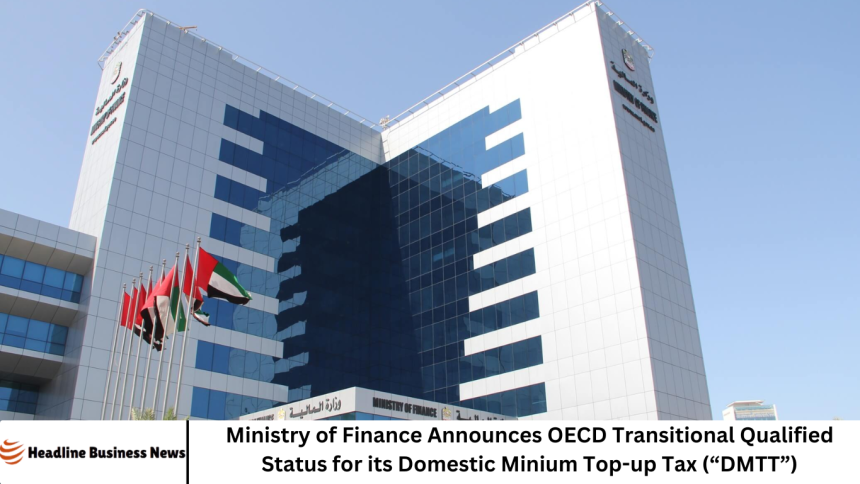
The Ministry of Finance has recently announced that its Domestic Minimum Top-up Tax (DMTT) has been granted OECD transitional qualified status, a landmark decision with significant implications for domestic and international taxpayers.
This development represents a critical step in aligning the country’s tax framework with global standards on minimum taxation and further strengthens its commitment to international tax compliance.
In this article, we explore the details of the DMTT, the significance of its OECD transitional qualified status, and what this means for businesses, investors, and tax authorities.
More Read: OGDCL Secures Rs. 7.7 Billion in Second Interest Payment Under Circular Debt Scheme
Understanding the Domestic Minimum Top-up Tax (DMTT)
The Domestic Minimum Top-up Tax (DMTT) is designed to ensure that corporations pay a minimum level of tax on their domestic profits, even if they benefit from various deductions, exemptions, or preferential tax rates. The concept is part of broader efforts to combat base erosion and profit shifting (BEPS) and to ensure a fairer tax system.
The DMTT works by assessing a minimum effective tax rate (ETR) on corporate income. If a company’s calculated tax falls below this threshold, it is required to “top up” its tax liability to meet the minimum requirement. This ensures that no business benefits from excessively low taxation due to loopholes or aggressive tax planning strategies.
Key Features of the DMTT:
- Minimum Tax Rate Enforcement: Ensures corporations meet the minimum effective tax rate.
- Alignment with International Standards: Reflects global initiatives, particularly OECD recommendations on Pillar Two taxation.
- Revenue Protection: Secures government revenue and reduces tax avoidance opportunities.
- Neutral Impact on SMEs: Small and medium enterprises are typically exempted or subject to simplified rules.
What is OECD Transitional Qualified Status?
The Organisation for Economic Co-operation and Development (OECD) has established guidelines for countries to implement minimum taxation rules under Pillar Two of its global tax framework. OECD transitional qualified status signifies that a country’s domestic tax measures, like the DMTT, meet the minimum requirements of the OECD’s framework during a transitional period.
This status is crucial because it provides:
- International Recognition: Confirms that the country’s tax system aligns with global tax rules.
- Transitional Compliance Flexibility: Allows gradual adjustment while complying with international standards.
- Investor Confidence: Encourages foreign investment by providing predictability and reducing tax disputes.
By achieving this status, the country demonstrates its commitment to transparency, fairness, and global cooperation in taxation.
Implications for Businesses and Multinational Corporations
The OECD transitional qualified status of the DMTT has significant implications for businesses, especially multinational corporations (MNCs) operating in multiple jurisdictions:
- Compliance Simplification: Businesses can align their tax reporting with OECD guidelines, reducing the risk of penalties and double taxation.
- Predictable Tax Liabilities: Companies now have a clear understanding of the minimum tax obligations in the domestic market.
- Investment Stability: International investors are reassured that local tax policies comply with OECD standards, making the country more attractive for foreign direct investment.
- Reduced Tax Disputes: Harmonized rules under OECD standards reduce the likelihood of conflicts between domestic and international tax authorities.
How the DMTT Aligns with Global Tax Reforms
The introduction and OECD recognition of the DMTT are part of a broader global tax reform movement led by the OECD and G20 countries. Key aspects of this reform include:
- Pillar One: Reallocating taxing rights of multinational enterprises to market jurisdictions.
- Pillar Two: Introducing a global minimum tax to prevent profit shifting and tax base erosion.
The DMTT is directly aligned with Pillar Two objectives, ensuring that domestic corporations contribute a fair share of taxes, and that multinational corporations cannot exploit gaps to minimize tax liabilities.
Benefits for the Domestic Economy
The DMTT and its OECD transitional qualified status bring multiple benefits to the domestic economy:
- Revenue Stability: Guarantees minimum tax collection from profitable entities.
- Level Playing Field: Ensures that all businesses pay their fair share of taxes, reducing unfair advantages.
- Strengthened Rule of Law: Reinforces legal frameworks in line with international standards.
- Global Reputation: Enhances the country’s reputation as a compliant and attractive business destination.
Challenges and Considerations
While the DMTT is a positive step, its implementation does present certain challenges:
- Administrative Complexity: Businesses and tax authorities must adjust to new reporting requirements.
- Sector-Specific Impacts: High-deduction sectors might face higher effective tax rates.
- Continuous Monitoring: The government must ensure compliance with evolving OECD guidelines.
- Communication Needs: Clear guidance is essential to avoid misinterpretation and ensure smooth adoption.
Expert Opinions
Tax experts and economists have welcomed the OECD transitional qualified status for the DMTT. According to Dr. [Expert Name], a leading tax economist:
“The OECD recognition of the DMTT is a significant milestone. It signals that the country is serious about combating tax avoidance while remaining aligned with international norms. This will enhance investor confidence and stabilize the domestic tax base.”
Similarly, [Industry Analyst] emphasized that multinational corporations will benefit from predictable tax treatment, which could boost foreign investment and economic growth.
Steps for Businesses to Comply with the DMTT
Businesses need to take proactive steps to comply with the new DMTT framework:
- Review Current Tax Structures: Evaluate whether existing deductions and exemptions trigger additional top-up taxes.
- Align with OECD Guidelines: Ensure accounting and reporting systems meet OECD requirements.
- Monitor Effective Tax Rates: Regularly calculate ETR to determine if top-up obligations exist.
- Engage with Tax Authorities: Seek guidance on interpretation and reporting processes to avoid disputes.
- Invest in Training and Software: Utilize tax software and employee training to streamline compliance.
Future Outlook
The OECD transitional qualified status is a transitional milestone, and the Ministry of Finance is expected to continue refining the DMTT in line with evolving international standards. Over time, this may include:
- Expanded coverage to additional sectors or corporate structures.
- Integration with digital reporting systems for real-time compliance monitoring.
- Enhanced collaboration with international tax authorities to reduce administrative burdens.
These steps will ensure that the DMTT remains effective, fair, and globally recognized.
Frequently Asked Question
What is the Domestic Minimum Top-up Tax (DMTT)?
The Domestic Minimum Top-up Tax (DMTT) is a tax measure that ensures corporations pay a minimum level of tax on domestic profits, even if they benefit from exemptions, deductions, or preferential rates. It is designed to prevent tax avoidance and align domestic taxation with global minimum tax standards.
What does OECD transitional qualified status mean for the DMTT?
OECD transitional qualified status indicates that the DMTT meets the minimum international standards set by the OECD’s Pillar Two framework during a transitional period. This status provides international recognition and ensures the tax is compliant with global norms.
How does the DMTT affect businesses?
The DMTT ensures that corporations maintain a minimum effective tax rate. Businesses may need to top up their tax liability if it falls below the minimum threshold. The OECD transitional status also provides predictability, reducing the risk of disputes with international tax authorities.
Why is OECD recognition important for the DMTT?
OECD recognition validates that the DMTT aligns with global tax reforms and anti-avoidance measures. It encourages foreign investment, enhances transparency, and demonstrates the country’s commitment to fair taxation and compliance with international standards.
Who is required to comply with the DMTT?
Primarily, corporations operating domestically, especially those with high profits and tax planning structures, must comply. Small and medium enterprises (SMEs) are often subject to simplified rules or exemptions to minimize administrative burdens.
What are the benefits of the DMTT for the domestic economy?
The DMTT provides multiple advantages, including:
- Ensuring a stable tax revenue base
- Promoting fair competition among businesses
- Strengthening the rule of law in taxation
- Enhancing the country’s global reputation as a compliant and investment-friendly jurisdiction
How can businesses ensure compliance with the DMTT?
Businesses should:
- Review existing tax structures and deductions
- Monitor their effective tax rate
- Align accounting practices with OECD guidelines
- Consult tax authorities for clarification
- Invest in tax software and employee training for accurate reporting
Conclusion
The announcement by the Ministry of Finance that the Domestic Minimum Top-up Tax (DMTT) has received OECD transitional qualified status marks a significant achievement for both domestic and international tax compliance. This status not only validates the country’s commitment to international tax standards but also provides clarity, predictability, and fairness for businesses and investors. As the global economy moves toward greater tax transparency and uniformity, measures like the DMTT serve as essential tools in combating tax avoidance and fostering sustainable economic growth. Businesses, investors, and policymakers must continue to collaborate to maximize the benefits of this landmark tax reform.