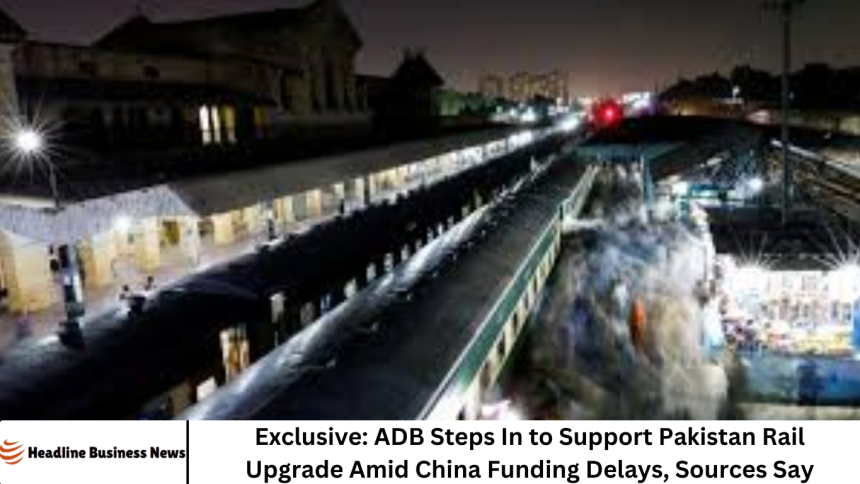
ISLAMABAD, August 22, 2025 – In a significant development for Pakistan’s infrastructure sector, the Asian Development Bank (ADB) is reportedly stepping in to finance crucial upgrades to the country’s aging railway network.
This move comes after prolonged delays in securing financing from China threatened to stall key projects under the China-Pakistan Economic Corridor (CPEC), sources familiar with the matter told Reuters.
The development signals a potential pivot in Pakistan’s infrastructure funding strategy, highlighting the growing role of multilateral financial institutions like the ADB in supporting strategic projects previously dominated by Chinese investment.
More Read: Asian Stocks Slip as US Rate-Cut Optimism Fades; Tech Sector Awaits Nvidia Results
Background: Pakistan’s Railway Infrastructure Challenges
Pakistan’s railway system, spanning over 7,791 kilometers, has faced years of underinvestment and operational inefficiencies. Once the backbone of the country’s transportation network, the railway system has struggled with outdated tracks, aging locomotives, and limited modernization.
The Karachi-Rohri rail corridor, a key artery in the south, is particularly crucial for freight movement, including mineral transport from strategic mining projects such as the Reko Diq copper and gold mine. However, delays in upgrading this corridor have created logistical bottlenecks, threatening both domestic and foreign investment in Pakistan’s mining and industrial sectors.
The Asian Development Bank’s intervention comes at a critical juncture when Pakistan’s railway infrastructure is under strain, and delays in Chinese financing could have broader economic implications.
The Role of China in Pakistan’s Rail Projects
The China-Pakistan Economic Corridor, a flagship initiative under China’s Belt and Road Initiative (BRI), has been central to Pakistan’s infrastructure modernization efforts. Announced in 2015, the $60 billion CPEC program was designed to enhance connectivity through extensive road, rail, and energy projects, with railways being a primary focus.
Initially, China pledged to finance the modernization of approximately 1,800 kilometers of Pakistan’s railway network. However, a decade of negotiations has yet to produce a final financing package for the railway upgrades, the single largest project under CPEC. Meanwhile, Pakistan has faced mounting pressure to repay Chinese loans from other infrastructure projects, creating additional financial strain.
ADB Steps In: Details of the Proposed Financing
According to sources, the ADB is in advanced talks to lead a $2 billion financing package for a 500-kilometer stretch of railway between Karachi and Rohri. This section, originally part of China’s planned upgrades, is critical for transporting minerals from the Reko Diq mine, operated by Canada’s Barrick Mining Corp.
One senior Pakistani government official emphasized the urgency of the project, stating, “We will have a crisis. How will you evacuate output from Reko Diq? The exhausted line will come under even more pressure.”
The ADB’s involvement is expected to include leading a consortium of international financiers and bringing in a global engineering contractor through competitive bidding. The project will undergo comprehensive due diligence, in line with ADB’s standard policies and procedures.
Strategic Importance of the Karachi-Rohri Rail Corridor
The Karachi-Rohri rail line is a lifeline for southern Pakistan’s economic activities. It connects Karachi, the country’s main port city, with interior Sindh and Punjab provinces, facilitating the movement of goods, raw materials, and industrial output.
With the Reko Diq mine ramping up production, the need for an efficient and modern rail corridor has become critical. The mine, one of the largest undeveloped copper-gold deposits in the world, is projected to significantly boost Pakistan’s mining sector and foreign exchange earnings. Without a reliable railway system, transporting extracted minerals to ports for export would face severe delays and increased costs.
Implications for China-Pakistan Relations
China’s foreign ministry reaffirmed its commitment to Pakistan as an “all-weather strategic partner” and expressed willingness to continue working with Islamabad on infrastructure projects. In response to the ADB’s involvement, China highlighted that future cooperation would extend beyond railways to include sectors such as industry, agriculture, and mining.
Diplomatically, the ADB-led project is seen as a pragmatic solution rather than a challenge to China-Pakistan relations. Pakistani officials reportedly coordinated the move with Chinese counterparts to ensure that it does not jeopardize ongoing strategic partnerships.
The Role of Multilateral Development Banks
The Asian Development Bank’s potential leadership in the Karachi-Rohri rail upgrade underscores the increasing role of multilateral development banks in South Asia. Institutions like the ADB provide not only financial support but also technical expertise, governance oversight, and international credibility, which can attract additional investors.
ADB President Masatsugu Asakawa is expected to visit Islamabad next week, signaling the bank’s commitment to supporting Pakistan’s infrastructure development. Earlier this month, the ADB announced $410 million in financing for the Reko Diq mine itself, further cementing its involvement in the region’s mining and transport infrastructure.
Economic Benefits of Railway Modernization
Modernizing Pakistan’s railway system offers numerous economic benefits:
- Increased Freight Capacity: Upgraded tracks and signaling systems can handle heavier loads and more frequent trains, improving efficiency.
- Cost Reduction: Rail transport is more cost-effective than road transport for bulk goods, reducing overall logistics costs for industries like mining and agriculture.
- Job Creation: Construction, engineering, and operational jobs will be created, boosting local employment.
- Foreign Investment: Reliable infrastructure attracts foreign investors seeking efficient transport networks for their projects.
- Energy Efficiency: Modern trains and tracks reduce fuel consumption, aligning with sustainable development goals.
Challenges Ahead
Despite the promising prospects, several challenges remain:
- Debt Sustainability: Pakistan’s existing debt obligations to China and other creditors require careful management to avoid financial strain.
- Project Coordination: Ensuring smooth collaboration between the ADB, Pakistani authorities, and local contractors will be critical.
- Operational Readiness: Even after financing, implementing a large-scale rail upgrade involves logistical and technical complexities.
- Political Risks: Changes in government policy or regional instability could impact project timelines.
Future of CPEC Projects
The ADB’s involvement may mark a shift in how Pakistan manages its infrastructure projects. While China remains a key partner, multilateral banks like the ADB can complement investments, especially when delays or financing challenges arise.
Other ongoing CPEC projects, such as power plants and the Gwadar East Bay Expressway, have faced delays or financing hurdles. Islamabad has sought to renegotiate debt payments for Chinese-built power stations after a government report highlighted the high costs. A balanced approach involving multiple financiers could mitigate these challenges while keeping strategic projects on track.
Perspectives from Industry Experts
Industry experts view the ADB’s move as a positive signal for investors and project stakeholders. According to infrastructure analyst Ahmed Qureshi, “Having the ADB lead the Karachi-Rohri rail upgrade not only ensures timely completion but also brings international best practices and governance standards. It reduces the risk of delays and cost overruns.”
Mining sector representatives also welcomed the development, emphasizing that reliable rail infrastructure is essential for export-oriented projects. “The efficiency of mineral transportation directly impacts project viability and profitability,” said a spokesperson from Barrick Mining Corp.
Environmental and Social Considerations
Modern railway upgrades are expected to incorporate environmental and social safeguards, including:
- Minimizing land acquisition impacts on local communities
- Reducing carbon emissions through energy-efficient locomotives
- Implementing noise and vibration mitigation strategies
- Enhancing safety for workers and passengers
The ADB has a strong track record of enforcing such standards, which is expected to improve both project sustainability and community acceptance.
Timeline and Next Steps
While details of the financing package are still under negotiation, sources suggest that an official announcement could come later this month. Following approval, the project will proceed with:
- Tendering Process: International engineering contractors will be invited to bid competitively.
- Detailed Design: Engineers will assess the existing railway infrastructure to develop modernized track, signaling, and station designs.
- Construction Phase: Upgrade work is expected to be executed in stages to minimize disruption to existing rail operations.
- Operational Handover: Trained personnel will manage upgraded sections to ensure efficiency and safety.
Frequently Asked Question
What is the Asian Development Bank’s role in Pakistan’s rail upgrade?
The Asian Development Bank (ADB) is reportedly leading a $2 billion financing package to upgrade a 500-km stretch of the Karachi-Rohri railway corridor, previously planned under China’s Belt and Road Initiative. The upgrade aims to modernize Pakistan’s aging rail infrastructure and support freight transport from mining projects like Reko Diq.
Why is China delaying its funding for Pakistan’s railway projects?
China has not finalized a financing package for the railway upgrades despite years of negotiations. Pakistan is also struggling to repay debt from other Chinese-backed projects, which has contributed to delays in releasing funds for the rail modernization project.
How critical is the Karachi-Rohri rail corridor?
The Karachi-Rohri corridor is a key transport artery in southern Pakistan, linking Karachi port with interior provinces. It is vital for transporting minerals, industrial goods, and raw materials efficiently. The corridor is particularly important for the Reko Diq copper-gold mining project.
How does the ADB financing impact Pakistan-China relations?
The ADB’s involvement is coordinated with China and is not expected to jeopardize the strategic China-Pakistan partnership. China has reaffirmed its commitment to continue cooperation in infrastructure, mining, agriculture, and industrial projects.
What are the economic benefits of upgrading Pakistan’s railways?
Modern railway upgrades can improve freight capacity, reduce logistics costs, create jobs, attract foreign investment, and enhance energy efficiency. Efficient rail transport also ensures timely delivery of minerals and industrial goods for export.
When is the Pakistan rail upgrade expected to begin?
While the official announcement is expected later this month, the project will follow a structured timeline: tendering of international contractors, detailed design, staged construction, and operational handover to ensure minimal disruption to existing rail services.
What challenges could affect the rail modernization project?
Potential challenges include Pakistan’s debt obligations, coordination between ADB and local authorities, technical and logistical complexities, and political or regulatory risks that could affect project timelines and execution.
Conclusion
The Asian Development Bank’s intervention in Pakistan’s railway modernization marks a pivotal moment in the country’s infrastructure development. Amid delays in Chinese financing and growing economic pressures, ADB support could ensure timely completion of the Karachi-Rohri rail corridor, a vital link for Pakistan’s mining, industrial, and export sectors. This collaboration highlights the evolving dynamics of Pakistan’s strategic partnerships, combining Chinese investment with multilateral financial support to achieve sustainable infrastructure growth. With timely execution, the upgraded railway system promises to enhance economic efficiency, attract foreign investment, and strengthen Pakistan’s position in the regional and global transport network.