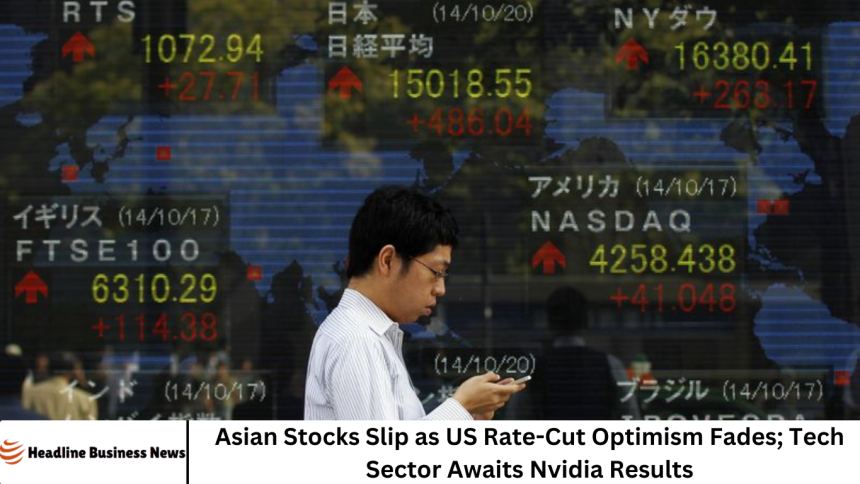
Asian stock markets experienced a downturn today as investors weighed mixed signals from the United States Federal Reserve. After weeks of optimism that the Fed may soon reduce interest rates, market sentiment softened, reflecting growing uncertainty in the financial landscape.
Meanwhile, technology stocks, particularly semiconductor giants, remain on edge ahead of Nvidia’s highly anticipated earnings report. In this article, we’ll explore the key drivers behind the Asian stock movements, analyze the tech sector’s outlook, and examine what Nvidia’s upcoming results could mean for global markets.
More Read: Japan Expresses Concern Over Currency Fluctuations, Finance Minister States
Understanding the US Rate-Cut Optimism
For months, investors have been closely monitoring the Federal Reserve’s policies, particularly its stance on interest rates. Historically, rate cuts are considered a boon for equity markets because they lower borrowing costs for businesses and consumers, stimulating economic growth.
However, recent economic indicators have created uncertainty around the timing and scale of potential rate cuts. Data on inflation, employment, and consumer spending suggest that while the Fed may ease its policy at some point, the pace might be slower than the market initially hoped.
As a result, Asian stocks, which are heavily influenced by global economic trends, have reacted to this uncertainty by pulling back from recent highs.
Key Economic Indicators Influencing Investor Sentiment
- Inflation Rates: While inflation in the US has shown signs of cooling, core inflation remains stubbornly high. Investors are unsure whether the Fed will feel comfortable implementing a rate cut soon.
- Employment Data: Robust job growth suggests a strong labor market, which may limit the Fed’s urgency to reduce rates.
- Consumer Spending: Consumer confidence has been inconsistent, adding another layer of unpredictability to the economic outlook.
These factors combined have tempered the enthusiasm that drove markets higher in recent weeks.
Impact on Asian Stock Markets
Asian markets are particularly sensitive to changes in US monetary policy due to strong trade ties and investment flows. Today’s pullback reflects this global interconnection.
Regional Market Performance
- Japan’s Nikkei 225: Fell 0.7%, with auto and electronics stocks leading the decline.
- Hong Kong’s Hang Seng Index: Dropped 1.1%, influenced by tech sector volatility.
- Shanghai Composite: Down 0.5%, reflecting a cautious approach among Chinese investors.
- South Korea’s Kospi: Slipped 0.8%, impacted by semiconductor and IT exports.
Investors appear to be recalibrating their expectations, shifting from speculative optimism to a more cautious stance.
Tech Sector on Edge Ahead of Nvidia Earnings
Technology stocks have been the main drivers of market volatility in Asia. The spotlight is now on Nvidia, the US chipmaker whose earnings report is scheduled for release later this week.
Why Nvidia Matters Globally
Nvidia is a bellwether for the semiconductor industry. Its performance is often seen as a proxy for demand in data centers, gaming, AI, and cloud computing. A strong earnings report could spark a rally in global tech stocks, while disappointing results could deepen the current sell-off.
Asian Tech Stocks Under Pressure
Asian tech stocks, including Samsung, TSMC, and Sony, have been particularly sensitive to Nvidia-related developments. Analysts suggest that any indication of slowing demand for GPUs or AI chips could weigh heavily on these companies’ valuations.
Key Metrics to Watch in Nvidia’s Report
- Revenue from AI Products: AI has become a major growth driver for Nvidia, and investors will scrutinize its contribution to total revenue.
- Gross Margins: Profitability in chip production is crucial for maintaining investor confidence.
- Supply Chain Outlook: Global supply chain disruptions could affect Nvidia’s ability to meet demand.
Investor Strategies Amid Uncertainty
Given the current market environment, investors are adopting a more cautious approach. Strategies include:
- Diversification: Spreading investments across sectors to reduce risk exposure.
- Hedging: Using options or other instruments to protect portfolios from downside volatility.
- Focus on Quality Stocks: Prioritizing companies with strong balance sheets and consistent earnings.
Financial advisors are urging investors not to react impulsively to short-term market fluctuations, emphasizing the importance of long-term investment strategies.
The Role of Global Macroeconomic Factors
Beyond US monetary policy, several global factors are influencing Asian stock markets:
- China’s Economic Recovery: Slower-than-expected recovery in China has dampened investor sentiment across Asia.
- Geopolitical Tensions: Conflicts and trade disputes continue to create uncertainty, particularly in export-driven economies.
- Commodity Prices: Fluctuations in oil, metals, and agricultural products impact energy and manufacturing sectors.
These factors contribute to the overall cautious tone in the markets, underscoring the interconnectedness of global economies.
Market Outlook: What to Expect Next
While short-term volatility is likely to persist, several trends suggest potential opportunities for investors:
- Tech Sector Resilience: Despite near-term volatility, long-term growth prospects in AI, cloud computing, and semiconductors remain strong.
- Monetary Policy Adjustments: Any confirmation of US rate cuts could reignite investor optimism.
- Regional Economic Stimulus: Governments in Asia may introduce measures to boost domestic consumption and investment.
Analysts advise keeping a close eye on upcoming earnings reports, macroeconomic data, and central bank announcements to navigate the uncertain landscape effectively.
Frequently Asked Question
Why are Asian stocks slipping today?
Asian stocks are declining as investor optimism over a potential US interest rate cut fades. Mixed economic data from the US, including persistent core inflation and strong employment figures, has made markets cautious.
How does a US rate cut impact Asian markets?
A US rate cut can stimulate global investment by lowering borrowing costs, boosting corporate profits, and increasing consumer spending. Asian markets, which are closely tied to US economic trends, often react positively to such announcements.
Which Asian markets are most affected by US monetary policy?
Major indices like Japan’s Nikkei 225, Hong Kong’s Hang Seng, South Korea’s Kospi, and China’s Shanghai Composite are particularly sensitive to US interest rate changes due to trade, investment flows, and multinational corporate exposure.
Why is the tech sector on edge ahead of Nvidia’s earnings?
Nvidia is a bellwether for the semiconductor and technology industries. Its earnings provide insight into demand for AI, gaming, and data center chips, which can influence global tech stock performance, including key Asian companies like TSMC and Samsung.
What should investors look for in Nvidia’s earnings report?
Key metrics include revenue from AI products, gross profit margins, supply chain outlook, and overall growth guidance. These indicators help assess Nvidia’s market position and potential impact on the broader tech sector.
How can investors protect themselves amid market volatility?
Investors often use strategies like diversification, hedging with options, focusing on high-quality stocks, and maintaining a long-term investment perspective to reduce risk during periods of uncertainty.
What is the market outlook for Asian stocks and tech companies?
Short-term volatility may continue as US monetary policy remains uncertain. However, sectors like AI, cloud computing, and semiconductors show strong long-term growth potential, and any confirmed US rate cuts could boost investor confidence in Asian markets.
Conclusion
Asian stock markets are experiencing a pullback as US rate-cut optimism fades, highlighting the intricate relationship between global economic signals and regional market performance. The tech sector, in particular, is on edge as investors await Nvidia’s earnings report, which could serve as a critical indicator for semiconductor and AI-driven industries. While volatility may persist in the short term, strategic diversification, careful monitoring of macroeconomic trends, and a focus on long-term growth sectors can help investors navigate the current environment. As global markets continue to respond to evolving monetary policies and corporate results, staying informed and adaptable will be key to capitalizing on opportunities.