In a world where brand identity is everything, companies are constantly seeking ways to express their personality beyond text and static visuals. Enter the realm of audio-visual branding—an innovative approach where music, sound, and rhythm inspire visual design.
This concept, known as visualizing sound, is gaining traction among musicians, podcasters, creatives, and designers who want logos that resonate—literally and figuratively.
In this article, we’ll explore the power of transforming music into logos and imagery, the creative and technical methods behind it, and a practical three-step workflow using Dreamina’s AI photo generator. Whether you’re a brand strategist, graphic designer, or simply a sound-obsessed creative, you’ll larn how to turn tones and textures into visuals that speak for your brand.
More Read: Samsung Attracts Gen Z with Sleek Designs and AI Features
Why Visualizing Sound Matters
The phrase “a picture is worth a thousand words” is true—but a sound can be worth even more. Music triggers emotion, memory, and movement. It can energize a room or bring tears to your eyes. Now imagine using that same power to guide your visual branding.
By translating audio into visual forms, you can:
- Create logos that embody a brand’s mood or tempo
- Enhance emotional resonance with your audience
- Offer unique brand signatures that stand out
- Design visuals that feel authentically “you” when spoken or played aloud
This practice isn’t limited to music. Podcasts, voiceovers, soundscapes, or even ambient noise can inspire shape, texture, and color in surprising ways.
The Science Behind Seeing Sound
Visualizing sound isn’t just poetic—it’s rooted in real sensory interplay.
1. Synesthesia: The Inspiration
Some people naturally “see” sounds. Synesthesia is a neurological condition where stimulation of one sense leads to involuntary experiences in another. For instance, hearing a piano note might evoke the color blue, or a word might have a flavor.
Designers can intentionally tap into this synesthetic crossover to associate sounds with visual attributes like:
- Shapes (e.g., a plucked string = arc or spiral)
- Textures (e.g., smooth jazz = velvet texture)
- Colors (e.g., high-pitched tones = bright yellows or icy blues)
- Movement (e.g., staccato = sharp, jagged lines)
Even if you’re not a synesthete, sound has clear visual metaphors: a deep bass is heavy, dark, and round. A whisper is soft, transparent, and airy. These intuitive cues are key tools in audio-to-visual branding.
Real-World Use Cases of Audio-Inspired Logos
1. Musicians & Bands
Artists often want visuals that reflect their sound. Imagine a lo-fi hip hop producer with a logo that looks like a melting cassette tape or soundwave rippling through vintage textures.
2. Podcasts
A podcast focused on tech and innovation might use sharp, angular forms with glitchy overlays—mirroring their sonic identity. A wellness podcast might favor organic curves and pastel palettes.
3. Coffee Shops & Boutiques
Businesses that use sound intentionally—like timing their coffee pour to a beat or curating in-store playlists—can extend this energy into their logo or packaging design.
4. Designers & Agencies
Creative professionals can offer sound-based logo design as a value-added service, appealing to clients who want branding that’s multisensory and emotionally engaging.
How to Listen for Design: Translating Sound into Visual Elements
Before you can design with sound, you need to break down the audio into elements that can inform your visuals.
Here are core sonic characteristics to listen for and how they might manifest visually:
| Sonic Element | Visual Equivalent |
|---|---|
| Tempo | Rhythm in layout, spacing, or repetition |
| Pitch | Color temperature (high = cool/bright, low = warm/dark) |
| Instrumentation | Texture (strings = soft, synths = sharp/clean) |
| Dynamics | Contrast in line weight, form size |
| Genre | Overall style (classical = ornate; techno = minimal) |
Example: A mellow acoustic guitar track might lead to soft, rounded lettering, earth-toned palettes, and hand-drawn textures.
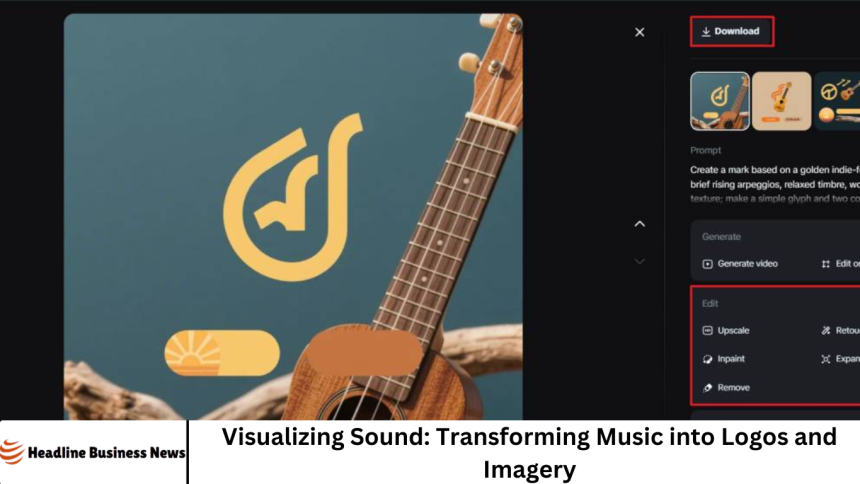
Using AI to Visualize Sound: Dreamina’s Audio-to-Image Workflow
Now that we’ve covered the philosophy and strategy behind visualizing sound, let’s walk through a three-step practical workflow using AI tools like Dreamina to bring your audio to life.
🎛️ Step 1: Record and Reflect
Start by recording a short loop (15–30 seconds) of the music or sound you want to work with. This could be:
- A chorus or riff
- A theme jingle
- Ambient background from your workspace
- A spoken phrase or podcast intro
Play it several times. As you listen:
- Write down how it feels
- Note any shapes, movements, or colors that come to mind
- Identify moods or tones (e.g., calm, energetic, eerie)
This reflection primes your brain to interpret sound visually—a critical first step in shaping an authentic design.
🎨 Step 2: Describe the Sound for the AI
Next, craft a vivid prompt for Dreamina’s AI image generator. Instead of saying “guitar riff,” describe the essence of what you heard.
Here’s a formula to follow:
[Mood] + [Textures] + [Color scheme] + [Shape/movement] + “inspired by [type of sound]”
Example Prompt:
“A warm, grainy texture with soft amber and cream tones, round and flowing like smoke rings, inspired by an acoustic guitar loop with a slow tempo.”
Another Example:
“Glitchy, futuristic textures in chrome and neon purple, sharp angles and digital noise inspired by an 8-bit synth melody.”
Use Dreamina to generate 3–5 visuals based on this prompt. Don’t treat these as final products—they’re visual mood boards that capture the energy of your sound.
🧩 Step 3: Extract Visual Motifs & Prototype Your Design
From your AI-generated imagery, extract the elements that stand out:
- Are there repeating patterns or shapes?
- What color palettes feel most in tune with the audio?
- Can you see symbols or forms you might abstract into a logo?
Then, begin sketching. Combine:
- Typography that reflects the rhythm or tone
- Shapes that echo waveforms or instruments
- Textures that bring in mood or feeling
Use tools like Figma, Illustrator, or Procreate to start prototyping. You’re not copying the AI—you’re using it as a bridge between sound and design.
Tips for Better Sound-Driven Designs
- Listen with Headphones
To catch subtle layers and textures, high-quality audio input is key. - Design in Silence
Once you’ve listened and internalized the sound, work without music to stay focused on the visual side. - Use Waveform Visuals Sparingly
While waveforms are an easy visual link to audio, they’re overused. Push beyond the obvious. - Prototype in Motion
Consider short animated logos or intro stingers that bring both the sound and visual together. - Test with an Audience
Play the sound and show the design. Ask: “Do these feel connected?”
Beyond Logos: Expanding Into Full Audio-Visual Branding
When you begin designing from sound, you unlock new branding potential across platforms:
- Website UI with background loops or sound-triggered animations
- Merch and print materials designed to reflect musical energy
- Album art that pulses with the track’s tone
- Social media visuals that echo voice or theme music
Brands that design holistically—from their voice to their visuals—build deeper connections and longer-lasting impressions.
Tools & Resources to Get Started
- Dreamina AI Photo Generator – Turn text prompts into visuals
- Adobe Audition / GarageBand – For audio editing and loop creation
- Adobe Illustrator / Figma – For prototyping logos and layouts
- Coolors.co – For palette creation based on audio description
- Google Fonts / Future Fonts – Explore typography that fits your sound
Frequently Asked Question
What does it mean to visualize sound in design?
Visualizing sound is the process of translating music, voice, or audio elements into visual forms such as logos, graphics, textures, and color schemes. Designers interpret sound qualities—like rhythm, pitch, tone, and emotion—and reflect them visually through shapes, movement, and composition.
How can music influence a logo design?
Music can influence logo design by guiding the mood, tempo, and aesthetic choices. For example, a fast-paced electronic track might inspire sharp lines and neon colors, while a soulful acoustic melody might lead to warm tones, rounded forms, and soft textures.
What tools can I use to turn music into visual art or logos?
You can use a combination of:
- Audio editing tools like GarageBand or Audacity (to isolate or loop key sounds)
- AI image generators like Dreamina (to turn descriptive audio prompts into visual inspiration)
- Design software like Adobe Illustrator, Figma, or Canva (to create and refine your logo)
Do I need to be a musician to create audio-inspired visuals?
No. While musical knowledge helps, anyone can use intuition and AI tools to interpret sound visually. Listening closely to how a sound makes you feel—and using that emotional response to guide your design—is more important than technical skill in music.
What are some examples of audio elements being used visually?
Examples include:
- Soundwaves or waveform shapes integrated into logos
- Color palettes inspired by a song’s emotional tone
- Typography that reflects the rhythm or genre of the music
- Animated visuals that move in sync with a brand’s theme song or intro music
Can AI really help turn sound into visual design?
Yes. AI tools like Dreamina allow you to input rich text descriptions of sounds and generate visual representations. These visuals can act as mood boards or concept art that you refine into logos or full brand identities.
Who benefits from sound-based visual branding?
Sound-based branding is ideal for:
- Musicians and bands
- Podcasters and voice-based creators
- Cafés, boutiques, or spaces with curated audio atmospheres
- Designers exploring sensory branding
- Agencies creating multi-sensory experiences for clients
Conclusion
Sound is primal. It’s the first language we respond to, and it bypasses logic to stir emotion. By learning how to visualize sound, designers and creators can craft logos, brands, and visuals that feel alive—as if they’re humming quietly even when standing still. With tools like Dreamina and a little sensory awareness, you don’t need to be a musician to design from music. You just need to listen differently, trust your intuition, and let the rhythm shape your next creative direction.