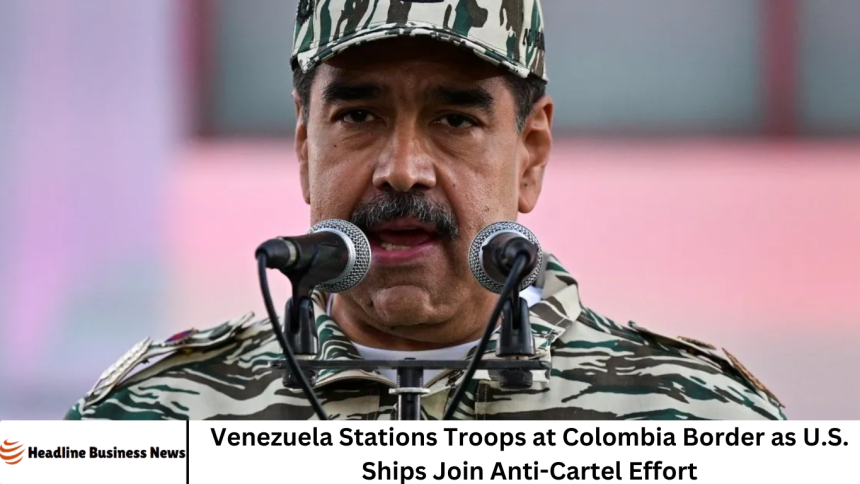
Venezuela has announced the deployment of 15,000 troops to its border with Colombia, targeting escalating drug trafficking and organized crime activities. Venezuelan Minister of the Popular Power for Interior, Diosdado Cabello, confirmed the move on Monday, emphasizing that security would be strengthened in Zulia and Tachira states, regions historically affected by cross-border smuggling and cartel operations.
This deployment represents one of the largest Venezuelan military mobilizations to secure its borders in recent years. The government asserts that this step is essential to combat drug trafficking networks, reduce violence in border towns, and maintain territorial integrity.
More Read: Jackie Chan’s The Shadow’s Edge Tops China Box Office
U.S. Expands Anti-Cartel Naval Operations in the Southern Caribbean
In coordination with regional efforts against drug trafficking, the United States has deployed two additional naval ships to the southern Caribbean. This move strengthens U.S. operations targeting Latin American drug cartels, a growing concern for both hemispheric security and international drug policy enforcement.
U.S. military sources indicate that the naval deployment aims to intercept drug shipments, gather intelligence, and support regional security partners. The Caribbean has long been a strategic transit point for narcotics, with traffickers exploiting porous maritime borders to transport cocaine and other illicit substances to North America and Europe.
Why Zulia and Tachira Are Critical
The Venezuelan states of Zulia and Tachira share a long and porous border with Colombia, making them key transit points for smuggling routes. Zulia, with its capital Maracaibo, is one of Venezuela’s most economically significant regions due to its oil infrastructure.
Tachira, bordering Colombia’s Norte de Santander department, has historically been a hotspot for paramilitary activity and drug trafficking networks.
Authorities claim that cartel operations in these regions not only facilitate drug trafficking but also fuel violence, kidnappings, and organized crime, creating insecurity for local populations. Strengthening military presence in these areas aims to curb these activities and assert government control over high-risk zones.
Historical Context of Drug Trafficking in Venezuela
Venezuela has been a focal point for drug trafficking for decades, primarily due to its geographic proximity to Colombia, the world’s largest cocaine producer. Various criminal organizations, including transnational cartels, exploit the border region to transport narcotics.
In recent years, the U.S. has frequently accused Venezuela of harboring drug traffickers and failing to control illegal drug flows. Venezuelan authorities have countered that they are actively combating these networks, citing recent military deployments and border security operations.
U.S.-Venezuela Collaboration: A Complex Relationship
While Venezuela and the U.S. have a history of tense diplomatic relations, anti-drug operations sometimes necessitate parallel or complementary actions. The current deployment of U.S. naval assets reflects Washington’s commitment to regional anti-cartel efforts and securing maritime routes.
Experts suggest that although direct collaboration between the U.S. and Venezuela is limited, both countries share a mutual interest in curbing drug trafficking. Coordinated actions, even if indirect, can have a significant impact on cartel operations across the Caribbean and northern South America.
Implications for Regional Security
The combined efforts of Venezuelan troops and U.S. naval forces signal a serious escalation in anti-drug operations in the region. Analysts note several potential implications:
- Disruption of Drug Trafficking Networks: Enhanced military and naval presence may reduce the volume of narcotics moving through the border region.
- Heightened Border Security: Increased troop deployments can deter smuggling and improve safety for local populations.
- Potential Tensions: Large-scale military operations could strain relations with local communities and neighboring Colombia if not managed carefully.
- Regional Cooperation Opportunities: The situation may open avenues for multi-country security agreements targeting organized crime.
Statements from Venezuelan Officials
Minister Diosdado Cabello emphasized that the Venezuelan government is fully committed to combating drug trafficking and ensuring border security. He highlighted that the deployment is part of a broader national security strategy to address criminal activities and protect Venezuelan citizens.
Cabello stated:
“Our troops will secure the border and prevent illegal activities from threatening the peace and safety of our people. We are committed to stopping drug traffickers at every step.”
U.S. Perspective on Anti-Cartel Operations
U.S. military officials view the Caribbean as a critical corridor for drug interdiction efforts. The two additional naval ships sent to the southern Caribbean are part of Operation Martillo and other coordinated initiatives aimed at reducing cocaine shipments to the U.S.
By maintaining a visible naval presence, the U.S. hopes to intercept shipments, gather intelligence, and disrupt the logistical networks of Latin American cartels. Officials also stress the importance of working with regional partners to enhance maritime and border security.
Challenges to Border Security
Despite the deployment of thousands of troops, the Venezuelan-Colombian border remains challenging to secure due to:
- Dense forested areas and difficult terrain.
- Long-standing smuggling routes used by drug traffickers.
- Corruption and infiltration of criminal networks into local law enforcement.
- High demand for narcotics in international markets.
Experts emphasize that addressing these challenges requires intelligence-driven operations, technological support, and long-term socio-economic interventions in border communities.
Expert Analysis: The Geopolitical Angle
Security analysts suggest that the troop deployment reflects both domestic political considerations and regional security priorities. Venezuela is under significant international scrutiny for its handling of internal and border security, and demonstrating a robust anti-drug stance can bolster its global image.
Additionally, the presence of U.S. naval assets underscores Washington’s ongoing commitment to combating the regional cocaine trade, which affects public health and security across the Americas.
The Role of Local Communities
Local residents in Zulia and Tachira have long suffered from cartel-related violence and insecurity. While the military presence may provide short-term protection, community engagement and economic development programs are essential for sustainable security improvements.
Humanitarian organizations note that excessive militarization can sometimes exacerbate tensions if not coupled with civilian support, highlighting the need for a balanced security strategy.
Looking Ahead: What to Expect
The coming months will likely see increased vigilance and interdiction efforts along the Venezuela-Colombia border. Key expectations include:
- Heightened patrols in border regions and strategic chokepoints.
- Interception of drug shipments by Venezuelan and U.S. forces.
- Potential clashes with criminal networks attempting to evade enforcement.
- Monitoring of cross-border migration, as increased military activity may impact civilian movement.
Long-term success depends on sustained efforts, regional cooperation, and addressing the root causes of drug trafficking, including poverty, corruption, and weak governance in border areas.
Frequently Asked Question
Why is Venezuela deploying troops to the Colombia border?
Venezuela is deploying 15,000 troops to its border with Colombia to combat drug trafficking, organized crime, and cartel activity, particularly in the states of Zulia and Tachira. The government aims to secure border regions and prevent illegal smuggling.
How many troops has Venezuela sent to the border?
According to Venezuelan Interior Minister Diosdado Cabello, 15,000 troops have been deployed to reinforce border security and combat drug-related criminal activity.
Why are U.S. ships being sent to the southern Caribbean?
The United States has deployed two additional naval ships to the southern Caribbean as part of its anti-drug operations targeting Latin American cartels. The ships help intercept drug shipments, gather intelligence, and support regional security efforts.
Which Venezuelan states are affected by the troop deployment?
The deployment focuses on Zulia and Tachira, two states bordering Colombia. These areas are critical for security because they serve as major transit points for smuggling routes and cartel operations.
How does the U.S. involvement impact anti-cartel operations?
U.S. naval presence enhances the effectiveness of anti-drug operations by intercepting shipments at sea, monitoring cartel movements, and supporting regional partners. While direct cooperation with Venezuela is limited, both nations share the goal of reducing drug trafficking.
What challenges exist in securing the Venezuela-Colombia border?
Challenges include dense terrain, long smuggling routes, corruption, and entrenched criminal networks. Effective security requires intelligence-driven operations, technology support, and socio-economic programs for border communities.
What are the potential impacts on local communities?
Military deployments may improve safety in the short term, but residents could also face restricted movement or increased tensions. Sustainable security depends on combining military action with community engagement and economic development.
Conclusion
The deployment of 15,000 Venezuelan troops to the Colombia border and the U.S. naval reinforcement in the southern Caribbean signal a significant escalation in anti-drug operations. These measures aim to disrupt cartel operations, secure borders, and enhance regional security. While challenges remain, including difficult terrain, entrenched criminal networks, and socio-economic issues, the coordinated efforts reflect the seriousness with which both nations approach the fight against drug trafficking. The success of these operations will depend on sustained engagement, intelligence-led strategies, and regional collaboration in the coming months.