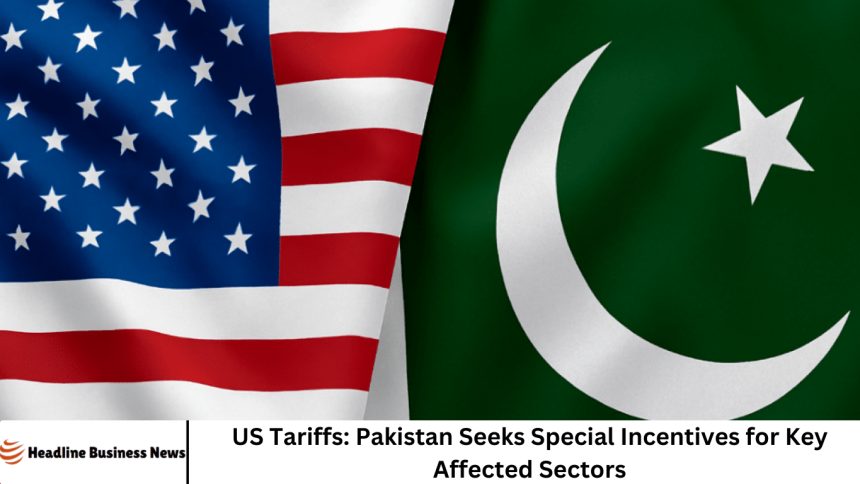
In a rapidly evolving global trade environment, Pakistan has found itself facing significant economic challenges after the United States imposed a sweeping tariff regime on global imports. Among the affected countries, Pakistan faces a 29% reciprocal tariff, threatening key export sectors that drive foreign exchange earnings and employment.
To cushion the impact, Commerce Minister Jam Kamal Khan has approached Prime Minister Shehbaz Sharif, requesting support for “handholding” incentives aimed at safeguarding industries most at risk.
This article explores the background, potential impact, government response, and broader implications of the US tariff hike on Pakistan’s economy and its major sectors.
More Read: Indian Factories Struggle to Pay Workers Amid Trump’s 50% Tariffs
Background: US Tariffs and the National Emergency Declaration
On April 2, 2025, US President Donald Trump, citing economic security concerns, issued an executive order declaring a national emergency in international trade. The order imposed:
- A base 10% ad-valorem tariff on imports from all trading partners, effective April 5, 2025
- Additional tariffs ranging from 10% to 50%, depending on the category of imports, effective April 9, 2025
- A specific 29% tariff on imports from Pakistan
This move has disrupted global supply chains and directly impacted Pakistan’s key export sectors, including textiles, garments, surgical instruments, leather goods, and IT services.
Pakistan’s Export Dependency on the US Market
The United States is one of Pakistan’s largest export destinations, accounting for:
- Over 20% of Pakistan’s total exports
- More than $6 billion in annual export revenue (as of FY2024-25)
- Major markets for textiles, readymade garments, sports goods, and IT services
The sudden increase in tariff rates poses a serious threat to the competitiveness of Pakistani products in the US market.
Sectors Most Affected by the US Tariffs
1. Textile and Apparel Industry
- Contribution to GDP: ~9%
- Employment: Over 15 million people
- Exports to US: $4.5 billion annually
The textile and apparel sector is likely to bear the brunt of the 29% tariff hike. Competitors like Bangladesh, Vietnam, and India—some of which have preferential trade agreements—may fill the gap left by Pakistan.
2. Surgical Instruments and Medical Devices
- Key export hub: Sialkot
- Annual exports to US: ~$400 million
This niche industry depends heavily on its reputation for precision manufacturing. However, with increased tariffs, Pakistani exporters may lose ground to European and Chinese competitors.
3. Leather and Footwear
- Exports to US: ~$300 million
- Heavily dependent on seasonal and bulk orders by major US retail brands
Tariff increases make it harder for Pakistani manufacturers to offer competitive prices while maintaining quality standards.
4. Information Technology (IT) and Business Process Outsourcing (BPO)
- Growing sector with $2 billion+ in annual exports
- Tariff imposition on digital services will reduce profit margins and limit expansion potential
Although services are harder to regulate with traditional tariffs, the US has introduced service-based taxation structures that also affect digital exports.
Government’s Response: Seeking Special Incentives and Support Measures
Commerce Ministry’s Proposal
Sources from the Ministry of Commerce confirmed that Jam Kamal Khan, Pakistan’s Commerce Minister, has formally sought Prime Minister Shehbaz Sharif’s intervention. The key proposals include:
- Financial support for affected industries
- Subsidized energy and input costs for export sectors
- Tax relief and rebates
- Export Development Fund to assist in product diversification and market expansion
- Negotiations for bilateral relief or exemptions from the US government
Prime Minister’s Expected Role
As per insider reports, Prime Minister Shehbaz Sharif is reviewing the proposals and may announce a federal relief package to stabilize export volumes, preserve employment, and ensure macroeconomic stability.
Industry Reactions and Economic Implications
Exporters’ Concerns
Several industry leaders have voiced concern:
“We are not just competing with quality anymore. Now we have to compete with countries that face lower or no tariffs. Our price advantage is lost,” — Textile Manufacturer, Faisalabad
“The US has been our most reliable customer. A 29% tariff puts us at an extreme disadvantage,” — Surgical Goods Exporter, Sialkot
Macro-Economic Impact
- Widening trade deficit: A drop in exports will aggravate the current account deficit
- Pressure on the Rupee: Lower foreign exchange earnings may lead to further depreciation
- Rising unemployment: Sectors like textiles and leather are labor-intensive and vulnerable to cost shocks
Policy Recommendations from Analysts
1. Explore New Markets
Economists suggest diversifying export destinations:
- Boost trade ties with China, Central Asia, Middle East, and ASEAN countries
- Capitalize on GSP+ status in the European Union
- Negotiate preferential trade agreements (PTAs) with emerging economies
2. Invest in Local Value Addition
Instead of exporting raw or semi-processed goods, Pakistan can increase earnings through:
- Technology upgrades
- Brand building
- Product design innovation
3. Strategic Diplomatic Engagement
Pakistan must engage in proactive diplomacy to:
- Seek tariff waivers or exemptions
- Collaborate through bilateral trade forums
- Leverage platforms like the World Trade Organization (WTO) to challenge unilateral tariffs
Global Trade Context: A Return to Protectionism?
President Trump’s executive order reflects a resurgence of protectionist policies. In the name of national security and economic revival, the US has reverted to strategies that limit free trade, impacting smaller economies like Pakistan disproportionately.
Other nations, including Mexico, China, and the EU, have already retaliated or negotiated exemptions. Pakistan must act swiftly to avoid prolonged economic setbacks.
Role of Pakistani Trade Missions and Export Bodies
Trade Development Authority of Pakistan (TDAP), Export Promotion Bureau, and Pakistani embassies in the US must:
- Conduct outreach campaigns to retain existing buyers
- Explore niche segments where demand remains resilient
- Work with chambers of commerce to coordinate lobbying efforts in Washington D.C.
The Road Ahead: Challenges and Opportunities
Challenges
- Loss of competitiveness due to higher tariffs
- Slow policymaking and bureaucratic delays
- Limited fiscal space to offer large-scale subsidies
Opportunities
- Push for self-reliance and industrial modernization
- Incentivize value-added exports
- Strengthen public-private partnerships to weather external shocks
Frequently Asked Question
What are the new US tariffs imposed on Pakistani exports?
In April 2025, the United States, under an executive order by President Donald Trump, imposed a base ad-valorem tariff of 10% on all imports, with additional tariffs ranging from 10% to 50%. Specifically, Pakistan was hit with a 29% reciprocal tariff, significantly raising the cost of Pakistani goods in the US market.
Which Pakistani sectors are most affected by the US tariffs?
The sectors most affected include:
- Textiles and apparel
- Surgical instruments
- Leather goods and footwear
- Information Technology (IT) services
These industries are heavily reliant on exports to the US and face a loss in competitiveness due to higher tariff costs.
What is the Pakistani government’s response to the US tariffs?
Pakistan’s Commerce Minister Jam Kamal Khan has approached Prime Minister Shehbaz Sharif, seeking special incentives and relief measures for the impacted sectors. These include financial subsidies, tax rebates, lower utility costs, and an Export Development Fund to support affected industries.
How will the tariffs impact Pakistan’s economy?
The tariffs could lead to:
- Reduced export volumes
- Job losses in key industries
- A wider trade deficit
- Increased pressure on the Pakistani Rupee
The economic impact could be severe if alternative markets and internal support measures are not put in place quickly.
Can Pakistan negotiate an exemption from US tariffs?
While there is no confirmed exemption, Pakistan may pursue diplomatic channels to negotiate relief or special treatment. Engaging with the US Trade Representative (USTR) and leveraging WTO mechanisms are potential strategies being explored.
Are there any opportunities for Pakistan amid these trade challenges?
Yes. The situation can be used to:
- Diversify export markets (e.g., EU, Middle East, ASEAN)
- Invest in value-added manufacturing
- Push for industrial modernization
- Strengthen public-private partnerships
The crisis could accelerate much-needed reforms in Pakistan’s export ecosystem.
What support measures are expected from the Pakistani government?
Proposed incentives include:
- Energy cost reductions for exporters
- Tax relief and rebates
- Soft loans and financing support
- Export development grants
These measures aim to help businesses maintain production, competitiveness, and jobs despite the external shock.
Conclusion
The imposition of 29% tariffs by the United States is a wake-up call for Pakistan to restructure its export strategy, modernize its industries, and diversify trade partners. While the move threatens to shake up the economy, it also presents an opportunity for long-overdue reforms. Commerce Minister Jam Kamal Khan’s call for “handholding” incentives reflects an urgent need for state-led economic cushioning. Prime Minister Shehbaz Sharif’s response in the coming weeks will be crucial in determining Pakistan’s ability to withstand external shocks and maintain its growth trajectory.