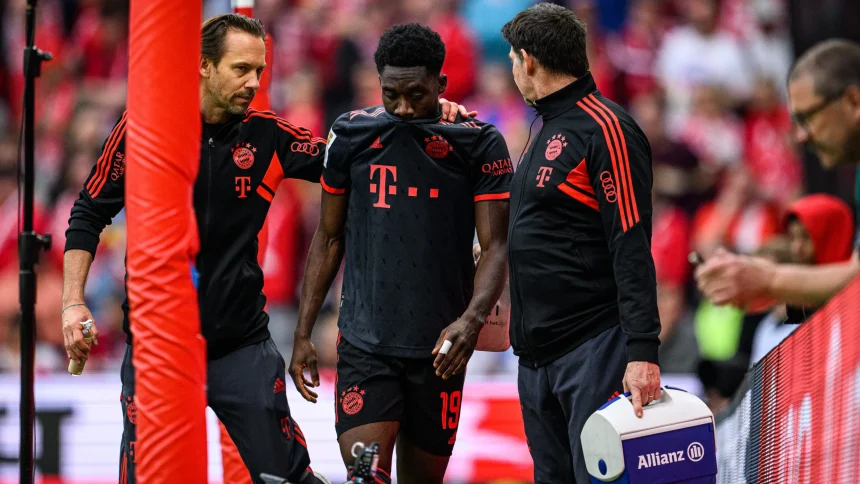
The core challenge for serious Bundesliga bettors in 2024/25 is not finding injury and suspension news, but correctly weighing its betting impact. Headlines tell you who is out; edges come from understanding how each absence changes tactics, chemistry and odds movement, and from knowing when the market has already fully priced that information.
Why injury and suspension news matters more than ever
In a league built on high intensity and compact schedules, player availability fluctuates constantly, with updated lists of injuries and bans published before every matchday. A missing starter alters not just raw quality but also planned patterns in pressing, build-up and set-pieces, which collectively shape chance creation and defensive stability. Bookmakers adjust odds when key players are ruled out, yet those adjustments are often uneven, creating pockets where line moves either overshoot or lag behind the true tactical impact.
How bookmakers translate absences into odds
Odds-setters treat injuries and suspensions as direct inputs into team strength models, with the size of adjustments calibrated to how irreplaceable each player is. A star forward or central playmaker typically triggers a sharp shift in match prices when ruled out, whereas a rotation full-back or fringe winger might barely move the line. The timing of information also matters: early reports usually lead to gradual pricing changes, while late-breaking news just before kick-off can create rapid, sometimes exaggerated swings as both bookmakers and the public scramble to react.
Distinguishing headline names from functional keystones
Not every big-name absence has equal tactical weight; the key is to separate reputation from structural importance. A widely known attacker may be partly replaceable if the system generates chances regardless of individual flair, whereas a less glamorous holding midfielder can be the anchor that keeps pressing lines together and protects the back four. Historical performance splits with and without particular players, where available, often show that removal of certain “glue” pieces produces disproportionate declines in defensive stability or chance suppression, despite modest fan attention.
Comparing injuries and suspensions as different kinds of absence
Injuries and suspensions remove players for different reasons and timelines, which affects how clubs adapt around them. Injury layoffs tend to be longer and more uncertain, causing teams to alter training patterns and sometimes their formation across several matches, while one- or two-game suspensions can be planned for as short-term disruptions with clear return dates. From a bettor’s perspective, injuries may encourage medium-term tactical adjustments that permanently lower or raise team strength, whereas suspensions often produce one-off drops in quality or discipline risk without fundamentally changing the broader trend line.
Building a structured process for reading injury reports
Serious bettors benefit from treating injury and suspension news as a repeatable pre-match checklist rather than a set of isolated anecdotes. Regularly updated Bundesliga availability pages aggregate who is out, probable return dates, and whether issues are new or recurring, offering a base layer of objective status data. The next step is mapping each absence onto a tactical role—ball-winner, box-to-box runner, deep playmaker, target forward—so that you can infer specific on-pitch changes rather than treating all missing players as equal subtractions.
When it comes time to apply this information, many bettors will cross-reference their analysis with prices on a dedicated sports betting service such as auto ufabet, not merely to find a place to place a wager but to gauge how strongly markets have reacted to the latest availability reports. By comparing their own valuation of a missing player’s tactical role with the magnitude and direction of the odds movement, they can identify situations where the public narrative either understates a critical absence or overstates the loss of someone who has a reliable replacement, turning raw news into a measured trading decision instead of a knee-jerk reaction.
Table: types of absences and typical betting impact
Sorting injuries and suspensions into functional categories helps clarify which stories deserve close attention and which are mostly noise. The table below translates broad availability labels into expected effects on performance and odds in Bundesliga betting contexts.
| Absence type | Typical example | Likely tactical effect | Expected odds reaction |
| Star attacker ruled out | Leading scorer or creator unavailable | Lower goal threat, fewer high-xG chances | Strong drift against affected team, possible total goals move |
| Defensive organiser missing | Key centre-back or holding midfielder out | Weaker structure, more high-quality shots conceded | Odds shift modestly but both teams-to-score/overs more attractive |
| Rotation or bench player injured | Occasional substitute absent | Minimal tactical change, depth slightly reduced | Little to no price change |
| Short suspension after red card | One- or two-match ban | Highly predictable short-term disruption, known return date | One-off adjustment, often fully priced in quickly |
This framework keeps analysis anchored in role and replaceability rather than pure name value. By checking how the market moves relative to the likely tactical effect, bettors can avoid overreacting to widely reported star injuries that already drove substantial odds shifts, while exploiting quieter but structurally important absences that slip under the radar.
Practical checklist: turning news into pre-match decisions
Simply reading who is injured is not enough; the goal is to convert news into a structured pre-match evaluation that consistently links cause (availability) to likely outcome (performance and probability). Working through the same set of questions before each Bundesliga fixture reduces emotional swings and helps maintain discipline, especially when news breaks close to kick-off.
Key questions for serious bettors evaluating injuries and suspensions:
- How many first-choice players are out, and are they concentrated in one line (defence, midfield, attack)?
- Are the absences long-term injuries or short suspensions that the squad has had time to plan around?
- What does past performance look like when these players were missing in previous matches or seasons?
- Does the team have proven replacements, or will youngsters and out-of-position options be used instead?
- How much have the odds already moved since the news was published, and does that movement match your estimated impact?
Interpreting these answers together allows bettors to decide whether the information still holds exploitable value or whether it has already been fully absorbed into the line. If market prices have shifted more than your estimate of the tactical damage, the injury might actually create contrarian opportunities on the supposedly weakened side; if the move is smaller than expected, there may still be room to oppose them before the closing odds catch up.
In-play reading of hidden fitness problems and late knocks
Not all impactful absences are known in advance: some players carry unreported knocks, worsen injuries during warm-ups, or suffer setbacks in the opening minutes. In live betting, the ability to spot emerging physical issues or imbalanced line-ups becomes as important as reading pre-match reports, especially when markets have not yet fully adjusted. Observing reduced sprinting, reluctance to challenge in duels or visible discomfort can hint at effective unavailability even when a player technically remains on the pitch, signaling potential value before substitutions or odds shifts make the situation obvious.
In parallel, some teams absorb early injuries better than others because their tactical system is robust and bench options are well integrated. Rapid reorganisation—such as shifting shape to cover a lost full-back or adjusting pressing triggers when a forward goes off—can stabilise performance and prevent the large drop that markets might initially anticipate. For serious bettors, watching how quickly structure recovers after an in-game injury is often a better indicator of future minutes than the mere fact that a starter has left the field.
Using casino online interfaces to track late news and live shifts
Modern casino online environments that integrate both pre-match and live markets make it easier to watch how odds react to evolving injury and suspension information. Sudden price moves often coincide with breaking news—such as confirmation that a doubtful star will miss out or start on the bench—but the magnitude and direction of those moves are not always perfectly aligned with tactical reality. By comparing their own impact estimates with the immediate adjustments in these interfaces, serious bettors can decide when to follow, when to fade and when to stay out, treating the market itself as a secondary information source about how widely known an absence has become.
At the same time, these environments allow rapid re-positioning when in-game injuries or red cards occur, provided the bettor understands how the specific loss changes expected tempo, possession and chance quality. A dismissal of a ball-playing centre-back, for example, may suggest both weaker build-up and more desperate defending, pushing a game toward scrappier, transition-heavy patterns that could favour certain totals or prop bets more than simple moneyline outcomes. The key is to connect each new absence to a coherent tactical story before acting, rather than chasing every odds tick.
Where betting on injury news can go wrong
Injury and suspension information is double-edged for bettors, because it is both crucial and highly public. Overreacting to widely reported absences often leads to taking poor prices after the main value has already disappeared, especially around globally followed clubs whose news is instantly reflected in lines. Focusing only on missing stars while ignoring how systems and replacements compensate can also produce biased judgments—for example, underestimating academy graduates or flexible role players who maintain much of the team’s functionality.
Another common failure is treating every absence as equally important across markets. A missing striker has different implications for match winner odds, total goals, both-teams-to-score and corner lines; assuming uniform impact obscures nuanced edges where, for example, a weakened attack may reduce scoring but leave defensive solidity intact. Serious bettors avoid this by mapping each injury onto specific market types instead of flattening all effects into a single “stronger/weaker” label.
Summary
In the 2024/25 Bundesliga, reading injury and suspension news well means moving beyond simple awareness of who is out toward a structured understanding of how each absence shifts tactics, cohesion and odds. Data and reporting show that bookmakers systematically adjust prices for key player availability, but not always with perfect accuracy, leaving room for serious bettors who consistently evaluate role, replaceability and market reaction rather than headlines alone. By combining pre-match checklists, live observation and careful use of modern betting interfaces, injury and suspension updates become a disciplined source of edge instead of an emotional trigger for rushed bets.