Memory foam is not a simple product. Behind every high-performing foam layer is a carefully engineered production process that directly determines how the material behaves under pressure, over time, and across varying conditions. Businesses sourcing foam for commercial applications need to understand what actually happens inside a manufacturing facility before placing any significant order.
When evaluating suppliers, it helps to search for memory foam manufacturers near me to assess regional options, but proximity alone should never be the deciding factor. A supplier’s manufacturing rigour matters far more than geography. Understanding the stages of production gives buyers the right questions to ask and the confidence to push back when answers seem vague or overly simplified.
Raw Material Selection Sets the Foundation
Polyol Composition Determines Performance: The primary building block of memory foam is polyol, a compound that reacts with isocyanate to create polyurethane. The molecular weight and functionality of the polyol directly affect how soft or firm the resulting foam will be. Higher-grade polyols tend to produce more stable cell structures, which translates into better long-term performance.
Isocyanate Ratios Shape Cell Behaviour: The ratio of isocyanate to polyol is carefully controlled during formulation. A slight imbalance can cause inconsistencies in cell openness, affecting how the foam responds to heat and pressure. Precise chemical ratios are not optional; they define whether the final product performs reliably or degrades prematurely.
The Chemistry Behind Comfort
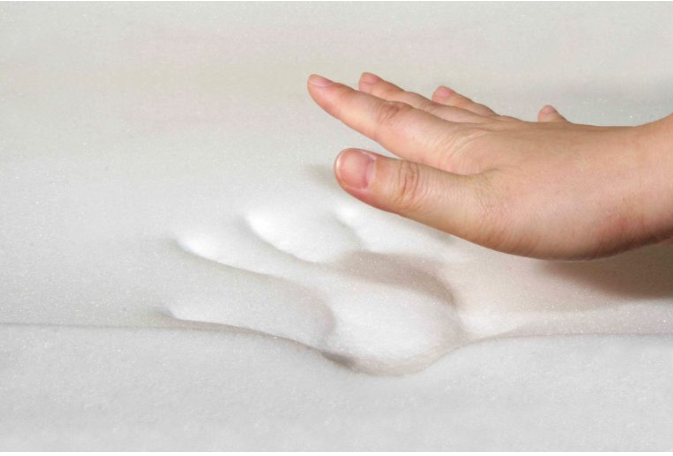
Viscoelastic Properties Emerge During Reaction: When the polyol and isocyanate blend is mixed with catalysts, surfactants, and blowing agents, a chemical reaction initiates foam expansion. The viscoelastic properties of memory foam develop during this phase, producing the slow recovery and pressure-distributing behaviour that makes this material so distinctive in bedding and seating applications.
Cell Openness Affects Heat Sensitivity: As foam rises and sets, the internal cell structure either opens or remains closed depending on formulation. Open-cell structures allow air and heat transfer, which influences how the foam softens under body temperature. Manufacturers who optimise this process consistently deliver products that feel responsive rather than stiff or sluggish.
Curing, Cutting and Shaping
Curing Time Stabilises the Structure: After initial foam rise, the material undergoes a curing period that allows the polymer network to fully cross-link and stabilise. Rushing this stage is one of the more common shortcuts taken by lower-quality producers, and the consequences tend to appear only after months of use, when foam begins to degrade faster than expected.
Precision Cutting Affects Product Consistency: Once cured, foam blocks are cut to specification using horizontal and vertical band saws or CNC cutting equipment. Precision at this stage determines how well the foam fits its intended application. Irregular cuts introduce performance variation across a batch, particularly in seating or mattress applications where dimensional accuracy matters.
Quality Control at Every Stage
These are the core checkpoints buyers should expect every legitimate manufacturer to maintain:
- Density Testing: Foam density, measured in kilograms per cubic metre, confirms the material meets specification. Low density often signals cost-cutting on raw materials.
- Tensile Strength Measurement: This test assesses how much force the foam can withstand before tearing, indicating structural integrity under stress.
- Indentation Load Deflection: ILD testing quantifies firmness by measuring resistance at 25% compression, providing objective data on comfort level.
- Resilience Testing: Resilience is evaluated through a ball rebound test, confirming how much energy the foam returns after compression.
- Dimensional Accuracy Checks: Post-cutting measurements verify that all pieces fall within acceptable tolerances before dispatch.
Why These Checks Protect Your Investment
Skipping Tests Costs More Later: Buyers who source from manufacturers without documented quality control often face higher returns, faster product degradation, and customer complaints. The cost of poor foam is rarely visible at the point of purchase; it tends to appear six to twelve months into use, which is precisely when it causes the most reputational and financial damage.
Batch Consistency Is Non-Negotiable: Quality control should not be limited to initial sample approval. Reputable manufacturers test regularly across production batches because raw material variation can affect foam properties even when the same formula is used. A supplier who cannot demonstrate batch-level documentation is a risk worth avoiding.
A Manufacturing Checklist for Sourcing Decisions
Before committing to a foam supplier, businesses should verify the following:
- Raw material traceability: Can the supplier document the source and grade of polyols and isocyanates used?
- Curing process documentation: Is curing time standardised and monitored across all production runs?
- Quality control records: Are density, tensile, and ILD test results available per batch?
- Cutting equipment standards: Does the facility use calibrated equipment with verified dimensional tolerances?
- Regulatory compliance: Does the foam meet relevant safety and environmental standards for the target application?
From Raw Chemistry to Commercial Confidence
Choosing a foam supplier is ultimately a decision about production discipline, not just product price. The manufacturers who invest in precise formulation, monitored curing, and consistent quality testing deliver foam that performs predictably across its intended lifespan. For businesses sourcing foam at scale, working with a supplier who can substantiate every stage of their process is not a preference; it is a commercial necessity. Reach out to a qualified foam manufacturer today and request full production and quality documentation before finalising any supply agreement.