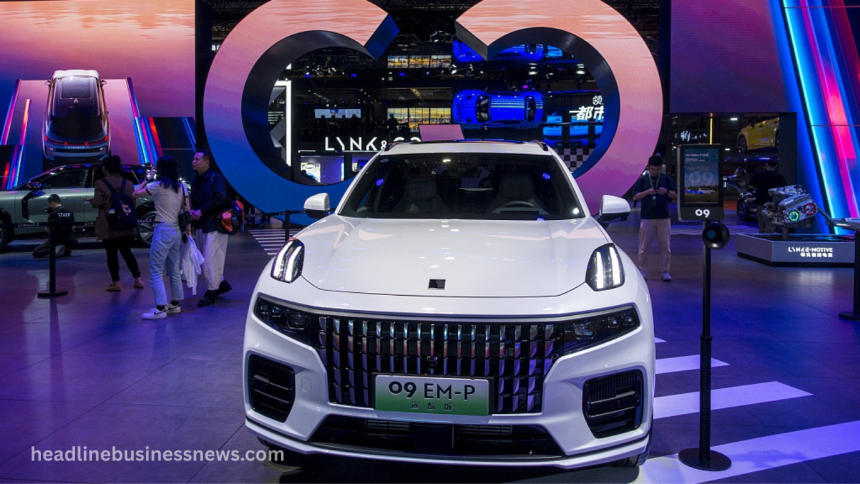
Auto Shanghai 2025 has once again positioned itself at the epicenter of automotive innovation, capturing global attention with its bold unveiling of the next generation of electric vehicles (EVs). But this year’s event took things to the skies—literally. With the debut of multiple flying car prototypes, the exhibition highlighted how far the industry is willing to push the boundaries of mobility.
As countries race toward sustainability and smart mobility, China’s leading auto expo has become a crucial platform for unveiling cutting-edge technologies. From hyper-intelligent EVs with autonomous features to aerial vehicles that promise to ease urban congestion, Auto Shanghai 2025 reflects a significant paradigm shift. The automotive landscape is no longer just about roads—it’s about redefining how we think of personal and commercial transportation entirely.
EV Innovation Takes Center Stage at Auto Shanghai
This year’s expo saw a massive turnout from global automakers and tech companies showcasing advanced electric vehicles. These models featured state-of-the-art battery technologies, extended driving ranges, and Level 4 autonomous capabilities. Startups and legacy brands alike focused heavily on AI integration, bright interiors, and eco-friendly materials, making it clear that sustainability is now the industry’s main driver.
Flying Cars Generate Unprecedented Buzz
Among the highlights were the highly anticipated flying car prototypes. Developed by companies like Xpeng AeroHT and HT Aero, these hybrid vehicles are designed for dual use and are capable of operating on roads and taking to the skies. With compact designs and vertical takeoff capabilities, these flying cars aim to solve traffic congestion and dramatically reduce urban travel times.
China’s Strategic Push for Future Mobility
China has doubled down on its ambitions to become the world leader in EVs and aerial mobility. Through government incentives, research funding, and supportive infrastructure development, Chinese firms are now leading in both ground and air-based mobility innovations. Auto Shanghai 2025 served as a showcase for the country’s futuristic roadmap, including smart highways and city-wide air mobility networks.
Global Automakers Compete with Bold EV Concepts
While Chinese companies dominated the event, major players like BMW, Tesla, and Hyundai also made headlines with their next-gen EV concepts. These included solid-state battery advancements, unique vehicle designs, and new autonomous driving algorithms. The competition has clearly entered a new phase where design, efficiency, and technology must converge seamlessly.
Bright Interiors and Connected Ecosystems Redefine User Experience
Beyond mobility, automakers are also transforming the in-car experience. Vehicles at Auto Shanghai featured immersive dashboards, AI voice assistants, facial recognition for personalization, and seamless smartphone integration. Some concept cars even included office-like settings and AR-powered entertainment, indicating that future vehicles will serve as more than just transport—they’ll be extensions of home and work life.
Regulatory Challenges and Safety Concerns on the Rise
As flying cars gain attention, regulators face the complex task of setting safety standards, air traffic rules, and infrastructure development. While companies claim their models are close to commercial readiness, experts urge for rigorous testing and legal frameworks. The excitement is high, but so are the questions around safety, noise pollution, and public acceptance.
Frequently Asked Questions
What is Auto Shanghai?
Auto Shanghai is a biennial international automobile exhibition held in Shanghai, China. It features innovations in cars, EVs, and aerial vehicles.
Are flying cars real and functional now?
Yes, several prototypes of flying cars have been developed and successfully demonstrated, though commercial availability is still a few years away.
Which companies introduced flying cars at Auto Shanghai 2025?
Xpeng AeroHT, HT Aero, and a few global startups introduced flying car prototypes, showcasing dual-mode driving and flight capabilities.
What makes the 2025 Auto Shanghai event significant?
It marks a turning point in mobility trends, emphasizing not just electric and autonomous cars but also the potential for personal aerial transport.
Are flying cars safe to use in cities?
Currently, flying cars undergo extensive testing. Safety protocols, pilot licensing, and traffic management systems are still being developed.
How is China supporting the EV and flying car industries?
Through subsidies, R&D grants, and infrastructure projects, China is creating a favorable environment for rapid innovation in this sector.
Will flying cars replace traditional vehicles?
Not entirely. Flying cars are expected to complement ground transport, especially in congested urban areas or remote regions.
When can we expect to buy a flying car?
Industry experts predict that consumer-ready models may hit the market between 2027 and 2030, pending regulatory approval.
Conclusion
Auto Shanghai 2025 has made it crystal clear: the future of mobility is both electric and airborne. As innovation accelerates, consumers and governments must adapt to a new era of transport. Stay informed and ready—because the sky is no longer the limit.